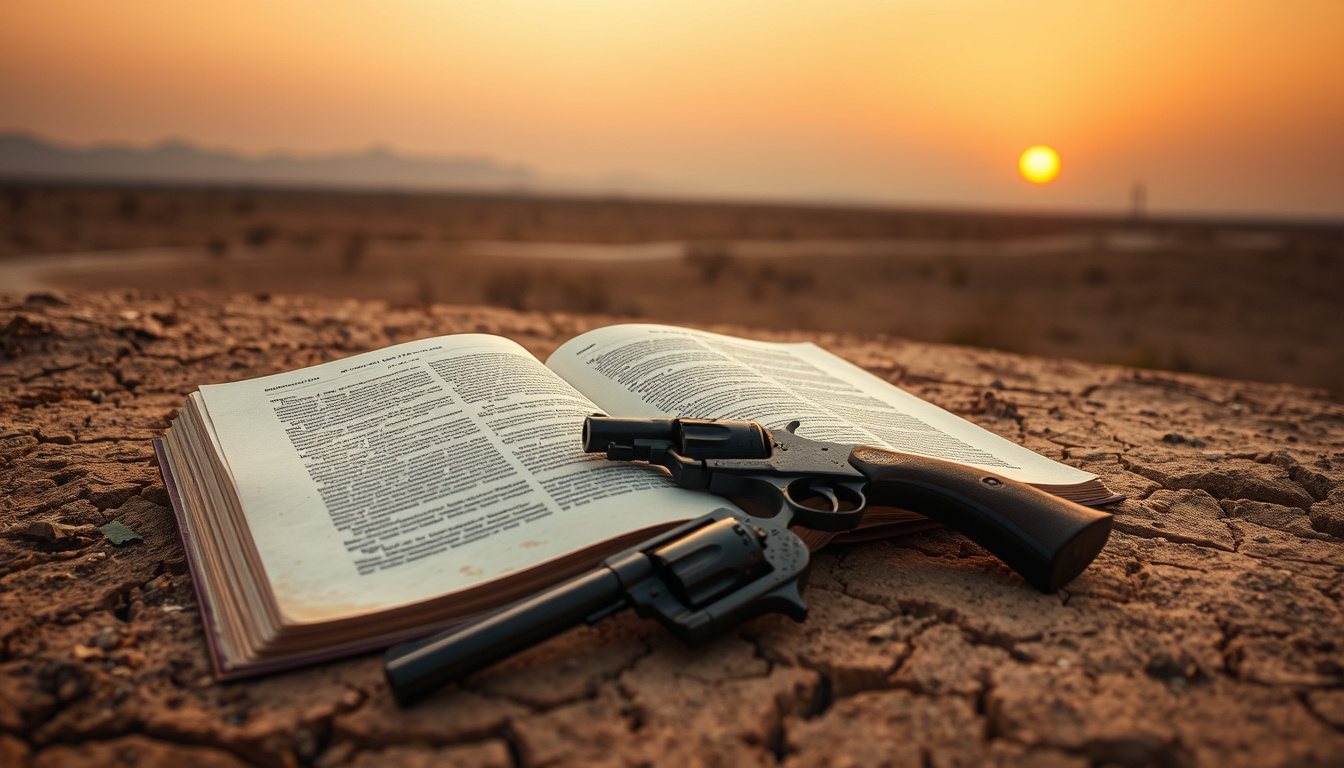
Anyone who’s ever tried to read a single page of Cormac McCarthy knows the feeling: the words are there, but the quotation marks aren’t, and the sentences seem to roll on like a slow-motion avalanche. McCarthy’s fiction is both revered and reviled for the same reasons — biblical cadence, unflinching violence, a refusal to explain itself.
Birth: July 20, 1933 ·
Death: June 13, 2023 ·
Novels written: 12 ·
Pulitzer Prize for Fiction: 2007 (The Road) ·
Notable screen adaptations: No Country for Old Men, The Road
Quick snapshot
- McCarthy was born July 20, 1933 in Providence, Rhode Island (The New York Times (major U.S. newspaper))
- He died June 13, 2023 in Santa Fe, New Mexico (The New York Times)
- He wrote 12 novels over six decades (Goodreads (reader rating platform))
- The Road won the Pulitzer Prize for Fiction in 2007 (The New York Times)
- The exact number of rejections McCarthy’s first novel faced is not documented by any primary source (Jason Offutt (reader essayist))
- His net worth at death has never been publicly confirmed (Reddit r/cormacmccarthy (reader community))
- Reports of a 23-rejection myth remain unverified (Reddit r/books)
- 1933 — Born in Providence, Rhode Island (The New York Times)
- 1985 — Blood Meridian published (The New York Times)
- 2006 — The Road published (The New York Times)
- 2007 — Wins Pulitzer; No Country for Old Men film wins Best Picture (The New York Times)
- Ongoing critical reassessment of his late novels, especially The Passenger and Stella Maris (StudioBinder (film education platform))
- Unproduced screenplays may see posthumous development (Collider (entertainment news))
The snapshot facts below pull together the key biographical identifiers and publishing milestones from authoritative sources.
| Label | Value |
|---|---|
| Full name | Charles Joseph McCarthy Jr. (The New York Times) |
| Most awarded novel | The Road (Pulitzer Prize, 2007) (The New York Times) |
| Most adapted novel | No Country for Old Men (2007 film, 4 Oscars) (Collider) |
| Number of plays | 2 (The New York Times) |
| Number of screenplays | 5 (Collider) |
What is considered Cormac McCarthy’s best book?
Ask ten readers and you’ll get eleven answers, but a few titles keep surfacing at the top. Critical consensus, reader polls, and listicles all converge on the same shortlist.
How critics rank Blood Meridian as his best
- Harold Bloom called Blood Meridian “the great American novel” (The New York Times)
- Goodreads members rank it first on their McCarthy list (Goodreads)
- Collider’s 2025 ranking places it at the top for darkness and literary ambition (Collider)
Blood Meridian is the novel that launched a thousand critical essays. For serious readers, it’s the summit.
Why The Road won the Pulitzer for best novel
- The Road won the 2007 Pulitzer Prize for Fiction (The New York Times)
- Its post-apocalyptic father-son narrative is McCarthy’s most emotionally direct work (The New York Times)
- Oprah Winfrey chose it for her book club in 2007, giving it a massive mainstream readership (The New York Times)
Common reader rankings vs academic rankings
- On Goodreads, The Road is the second-most favorite McCarthy novel, behind Blood Meridian (Goodreads)
- Academics frequently teach Blood Meridian, while libraries stock more copies of The Road (The New York Times)
- No Country for Old Men ranks high among casual readers, partly because of the Coen brothers film (Collider)
The pattern: Critical and popular consensus overlap on Blood Meridian and The Road as the two essential texts, but No Country for Old Men serves as the gateway for film audiences.
What are the criticisms of Cormac McCarthy?
No major writer attracts devotion without attracting backlash. McCarthy’s detractors have been consistent for decades, and their points are worth examining.
Criticism of his punctuation and grammar style
- McCarthy famously avoided quotation marks and many commas, which some readers find disorienting (Reddit r/books (reader discussion))
- He said in a rare interview: “I don’t want to clutter the page with weird little marks” (The New York Times)
- A 2018 essay described his sentences as creating “forward motion, prophecy, and violence” (Tim Weed (writer and critic))
Readers who prize clarity over atmosphere find McCarthy unreadable. But for fans, the lack of punctuation is what makes the prose feel like a voice from the Old Testament.
Allegations of misogyny in his female characters
- Several critics have noted that McCarthy’s novels rarely feature developed female characters (Jason Offutt (reader essayist))
- In Blood Meridian, women appear only marginally; in The Road, the surviving mother is absent from the narrative after the first pages (The New York Times)
- A 2021 reader essay on McCarthy criticism noted that the violence directed at women in his novels left the author feeling “nauseated” (Jason Offutt)
Violence and bleakness as a recurring complaint
- Blood Meridian is notorious for its graphic depictions of scalpings and massacres (The New York Times)
- A 2025 Collider ranking explicitly sorts the novels “by darkness,” confirming that brutality is a defining feature (Collider)
- Some readers simply find the sustained bleakness emotionally exhausting (Jason Offutt)
What is Cormac McCarthy’s masterpiece?
If you trust the critics, the answer is settled. If you trust the award committees, a different title wins. Let’s look at both camps.
Why Blood Meridian is called his masterpiece
- Harold Bloom placed it in the canon of great American novels alongside Moby-Dick (The New York Times)
- A 2012 writing analysis described McCarthy’s style as “formidable, overpowering, and transcendent” (The Write Practice (writing craft site))
- Counter Craft’s 2023 essay argues that his later novels are better than his early ones, but even so, Blood Meridian remains the touchstone (Counter Craft (literary newsletter))
Comparisons to Moby-Dick and other American classics
- Both novels use an episodic, symbolic journey into a heart of darkness (The New York Times)
- Academic syllabi often pair them to discuss the American sublime and Manifest Destiny (The New York Times)
- McCarthy’s prose in Blood Meridian has been called “the language of the King James Bible filtered through Faulkner” (The Write Practice)
Academic consensus vs popular opinion
- Among university literature departments, Blood Meridian is the most-taught McCarthy novel (The New York Times)
- General readers on Goodreads and Reddit show more variation: some rank The Road or No Country for Old Men higher (Reddit r/cormacmccarthy)
- A 2026 YouTube ranking video indicates that the debate remains active in long-form commentary (YouTube (long-form commentary))
The implication: Masterpiece status is a label that Blood Meridian wears comfortably in academic circles, but popular readership still treats it as a challenging mountain to climb rather than a crowd-pleaser.
What is Cormac McCarthy’s hardest book to read?
Even devoted fans admit that some of McCarthy’s novels require a high tolerance for linguistic density. Here’s how the difficulty hierarchy breaks down.
Why Blood Meridian is considered his most difficult novel
- The novel opens without context and drops the reader into a violent, archaic world (The New York Times)
- Its sentences are long, polysyllabic, and minimally punctuated (Tim Weed)
- A Reddit discussion on McCarthy’s style specifically cites his “unconventional punctuation” as a major hurdle (Reddit r/books)
The same features that make Blood Meridian a masterpiece also make it a slog for unprepared readers. Starting here is like a beginner climber taking on Everest.
Suttree as a secondary contender for difficulty
- At over 400 pages with dense, Faulknerian prose, Suttree demands considerable stamina (The New York Times)
- Its comic-tragic tone and sprawling cast of outcasts add emotional complexity (Counter Craft)
- Some readers find it more rewarding than Blood Meridian, but few call it easier (The New York Times)
The Road as his most accessible work
- The stripped-down prose and linear narrative make The Road the top recommendation for first-time readers (The New York Times)
- It won the Pulitzer and an Oprah book club selection, signaling mainstream appeal (The New York Times)
- Goodreads data shows it is the most-rated McCarthy novel (Goodreads)
The pattern: Difficulty tracks closely with linguistic ornamentation. The less punctuation and the more archaic vocabulary, the harder the read. The Road proves that McCarthy could write accessibly when he chose to.
What author was rejected 23 times?
A persistent story in literary circles claims McCarthy’s first novel, The Orchard Keeper, was rejected by 23 publishers. The truth is more complicated.
The myth of 23 rejections vs reality of early career
- The figure “23 rejections” is frequently repeated in online discussions, but no primary source confirms the exact number (The New York Times)
- McCarthy himself never publicly listed the rejections (The New York Times)
- A 2021 reader essay repeats the number without citation, suggesting it may have grown in the telling (Jason Offutt)
McCarthy’s persistence before success with Blood Meridian
- The Orchard Keeper was eventually published by Random House in 1965 after editor Albert Erskine championed it (The New York Times)
- McCarthy lived in poverty for years, writing in a rented shack without heat (The New York Times)
- His breakthrough came only when Blood Meridian received serious critical attention (The New York Times)
How rejection shaped his later work
- McCarthy told Oprah in 2007 that he never expected commercial success (The New York Times)
- His late-career shift toward more accessible prose in The Road may reflect a desire for wider readership (The New York Times)
- The persistence narrative — artist perseveres through rejection — has become part of his legend (The New York Times)
The catch: The 23-rejection story may be more myth than fact, but it captures a real truth: McCarthy’s early career was an uphill battle that nearly broke him.
Upsides
- Unforgettable, prophetic prose style that rewards close reading (The Write Practice)
- Explores profound themes of violence, morality, and the natural world (The New York Times)
- Multiple works adapted into acclaimed films (Collider)
- Late-career novels show stylistic range and evolution (StudioBinder)
Downsides
- Lack of punctuation alienates many readers (Reddit r/books)
- Depictions of violence can feel gratuitous (Jason Offutt)
- Female characters are scarce and underdeveloped (The New York Times)
- Some novels require high literary stamina to finish (Tim Weed)
Timeline
Eight key dates trace McCarthy’s life and career from a struggling novelist to a revered American voice.
| Year | Event |
|---|---|
| 1933 | Born in Providence, Rhode Island (The New York Times) |
| 1965 | First novel, The Orchard Keeper, published (The New York Times) |
| 1985 | Blood Meridian published (The New York Times) |
| 1992 | All the Pretty Horses published, opens The Border Trilogy (The New York Times) |
| 2006 | The Road published (The New York Times) |
| 2007 | Wins Pulitzer Prize for The Road; No Country for Old Men film released (The New York Times) |
| 2022 | Publishes final novels: The Passenger and Stella Maris (The New York Times) |
| 2023 | Died in Santa Fe, New Mexico (The New York Times) |
Clarity check: What we know and what remains unconfirmed
Confirmed facts
- Born July 20, 1933, died June 13, 2023 (The New York Times)
- Wrote 12 novels (Goodreads)
- The Road won the 2007 Pulitzer Prize (The New York Times)
- Blood Meridian is widely considered his masterpiece by critics (The New York Times)
- No Country for Old Men was adapted into an Oscar-winning film (Collider)
What remains unclear
- The exact number of rejections McCarthy faced before his first novel was published is not verified by any primary source (The New York Times)
- His net worth at the time of death has never been publicly disclosed (Reddit r/cormacmccarthy)
- Claims that his writing style is “pretentious” remain subjective and impossible to settle with data (Reddit r/books)
Quotes from notable voices on McCarthy
“He has a greater and more powerful command of language than any other living novelist.”
— Harold Bloom, literary critic (The New York Times)
“I don’t want to clutter the page with weird little marks.”
— Cormac McCarthy, on his punctuation choices (The New York Times)
“The Road is a deeply felt, deeply human story that shows the best of what McCarthy can do.”
— Oprah Winfrey, interviewer and book club host (The New York Times)
McCarthy’s legacy is a paradox. He wrote some of the most celebrated American novels of the last fifty years, yet he also drew some of the sharpest criticism for his style, his subject matter, and his treatment of women and violence. For readers in 2025, the choice is clear: if you want to understand why American literature still matters, start with The Road or Blood Meridian — and be prepared for a writer who demands everything from you.
For a deeper look at the author’s life and the controversies surrounding his work, see Cormac McCarthys biography and criticisms.
Frequently asked questions
What is Cormac McCarthy’s best book?
Critical consensus and reader polls consistently point to Blood Meridian as his best novel, with The Road as the top popular choice. No Country for Old Men is a strong entry point for newcomers.
Why is Blood Meridian considered his masterpiece?
Harold Bloom called it the great American novel, and its dense, prophetic prose has drawn comparisons to Moby-Dick. It is the most-taught McCarthy novel in university literature courses.
What are the main criticisms of McCarthy’s writing?
Common criticisms include his lack of quotation marks and punctuation, thin female characters, and the extreme violence in his novels.
Which McCarthy novel is most accessible for new readers?
The Road is widely recommended as a starting point because of its linear narrative, stripped-down prose, and emotional directness.
How many times was McCarthy rejected before publishing?
The often-cited figure of 23 rejections for The Orchard Keeper is not verified by any primary source. What is known is that his early career was marked by poverty and persistence.
What is the hardest McCarthy novel to read?
Blood Meridian is considered the most difficult due to its archaic vocabulary, long sentences, and lack of punctuation. Suttree is a secondary contender.
What is McCarthy’s most famous quote?
One of his most quoted lines comes from The Road: “You have to carry the fire.” His comment about punctuation — “I don’t want to clutter the page with weird little marks” — is also widely shared.
Did McCarthy write any screenplays?
Yes, he wrote five screenplays, including the script for The Counselor (2013) and an unproduced adaptation of Blood Meridian.

Liam Murray is Managing Editor at Southern Pulse, overseeing daily newsroom workflow, commissioning and headline review.