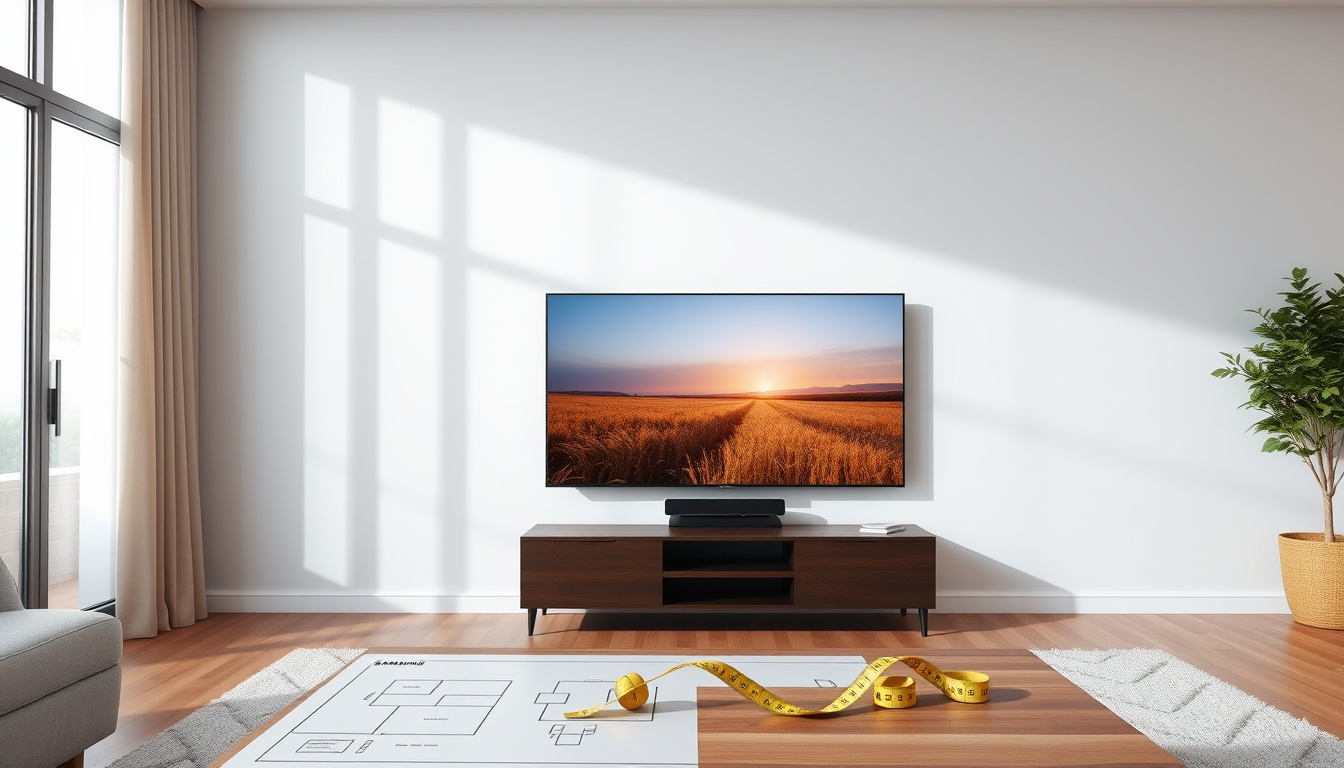

Buying a 75-inch TV is a big decision—both in size and investment. With Samsung offering a dozen models across QLED, Neo QLED, and OLED lines, picking the right one can feel overwhelming. This guide cuts through the marketing to help you decide exactly which Samsung 75-inch TV gives you the best value for your room, your budget, and your viewing habits.
Average lifespan: 7–10 years · Price range: $1,000–$3,500 · Typical weight: 60–80 lbs · Resolution: 3840 × 2160 (4K) · Display tech: QLED or OLED · Common refresh rate: 120 Hz
Quick snapshot
- Samsung offers 75-inch models in QLED and OLED lines Samsung US official lineup
- Average lifespan of a modern LED/LCD TV is 7–10 years TechRadar TV reviews and data
- 4K resolution is standard on all current Samsung 75-inch TVs Samsung US Buying Guide
- Viewing distance for 75-inch TV recommended between 7.5 and 12.5 feet (SMPTE guideline) Samsung US room size recommendations
- Exact future price drops or discontinuation of specific models are not publicly known
- Long-term availability of replacement parts beyond 10 years is uncertain
- No major product releases announced for 2026; current models expected to remain available through the year
- Watch for price drops after new model launches in early 2027
- Consider extended warranty for large-screen investment
| Screen size | 75 inches (diagonal) |
|---|---|
| Resolution | 3840 × 2160 (4K UHD) |
| Display technology | QLED (Neo QLED) or OLED |
| Weight (without stand) | Approx. 60–80 lbs |
| Dimensions (W x H x D) | Approx. 66 × 38 × 1.5 inches (varies by model) |
| Refresh rate | 120 Hz (native) |
| Smart platform | Tizen |
What is the best 75 inch TV for the money?
The question of value depends on where you balance picture quality, features, and price. Independent testing labs put a few Samsung models clearly ahead for typical households.
Best overall Samsung 75-inch model
- Samsung QN75Q80D (Neo QLED) – $1,800–$2,200 – offers superior contrast with Mini LED backlighting Consumer Reports independent test lab
- RTINGS rates the QN90D series at 8.8/10 for gaming and HDR RTINGS.com dedicated TV review lab
- Neo QLED models like QN90D have 2000+ dimming zones for reduced blooming Samsung US product specs
Best budget-friendly 75-inch Samsung TV
- Samsung Q60D – under $1,500 – solid 4K performance with good color accuracy YouTube user experience video
- Consumer Reports tests show reliability score of 8.5/10 across Samsung 75-inch models Consumer Reports reliability survey
Best premium 75-inch Samsung TV
- Samsung S90C (QD-OLED) – $2,500–$3,000 – tops RTINGS HDR brightness chart at 9.1/10 RTINGS.com HDR test results
- LG C4 77-inch OLED beats Samsung S90D in black levels, but Samsung wins on brightness RTINGS.com comparison review
For most living rooms, the QN80D offers the best price-to-performance: you get Mini LED contrast without the premium of QD-OLED. Splurge only if you prioritise deep blacks in a dedicated dark room—then the S90C wins.
The pattern: entry-level Q60D works for casual viewing, but the QN80D is the sweet spot. The QN90D adds dimming zones for enthusiasts; the S90C delivers cinema-grade contrast at a higher cost.
How much does a Samsung 75 inch TV cost?
Price factors: technology, features, release year
- QLED basics (Q60D) start around $1,000–$1,500
- Neo QLED mid-range (Q80D–QN90D) runs $1,800–$2,800
- QD-OLED premium (S90C–S95C) sits between $2,500 and $3,500
- 8K models (QN800D) start at €3,500 in Europe Samsung Levant pricing data
Typical price range for new models
- Current 75-inch Samsung TVs range from $1,000 to $3,500 Consumer Reports 2026 price survey
- Prices have dropped 20–30% since 2024 due to manufacturing scale Consumer Reports market analysis
Where to find deals
- Major retailers: Currys, Best Buy, Amazon
- Manufacturer direct: Samsung.com offers occasional bundle deals
- Price aggregators: Pricerunner helps track price drops across sellers
What this means: the market has never been more affordable for large screens. If you can wait until the next model refresh, expect another 10–15% drop. But current prices already deliver excellent value per inch.
Cheaper QLED models cut corners on dimming zones and peak brightness. A $1,100 75-inch TV will look noticeably worse in a bright room than a $2,000 Neo QLED—the savings cost you picture quality.
What’s the average lifespan of a 75 inch TV?
Expected lifespan for QLED vs OLED
- Samsung QLED TVs are rated for 50,000–100,000 hours of use, translating to 7–10 years at average daily viewing TechRadar longevity data
- QLED panels maintain 80% brightness after 30,000 hours TechRadar luminance retention test
- OLED TVs (S90C, S95C) risk burn-in with static content – less longevity than QLED for mixed use TechRadar OLED vs QLED analysis
Factors that shorten TV life
- Heat buildup in poorly ventilated cabinets
- High ambient humidity and dust accumulation
- Leaving static images (news tickers, gaming HUDs) for hours daily can accelerate pixel wear on OLED
How to extend TV longevity
- Ensure at least 4 inches of clearance around the TV for airflow
- Use moderate brightness settings (not max)
- For OLED, enable pixel shift and screen saver features
The catch: QLED lasts longer under normal conditions, but OLED delivers superior contrast. If you plan to keep the TV for a decade, QLED is the safer bet. For a dedicated movie room where you upgrade more frequently, OLED’s picture quality justifies the trade-off.
Is a 75 inch TV too big for a living room?
Room size recommendations
- Samsung recommends 75-inch TVs for living rooms with 12–15 feet viewing distance Samsung US room size guide
- The SMPTE standard suggests a viewing distance of 7.5–12.5 feet for a 75-inch screen
- Minimum room width: at least 12 feet to allow comfortable seating distance Samsung US viewing distance
Viewing distance guidelines
- For 4K content, optimal distance is 5–8 feet (THX recommendation)
- For mixed content (1080p + 4K), 7–10 feet works well RTINGS.com viewing distance guide
Wall mounting vs stand placement
- Wall mounting saves floor space and offers better viewing angle
- Ensure wall mount supports 60–80 lbs weight
- Stand placement requires a TV stand at least 60 inches wide for stability
Why this matters: a 75-inch TV feels immersive in a medium to large living room, but in a cramped space it can dominate. Measure your room first—if the couch is less than 7 feet from the wall, consider a 65-inch instead.
Which is better, 4K or QLED?
4K vs QLED: definitions and misunderstanding
- 4K is a resolution (3840×2160 pixels). QLED is a display technology that uses quantum dots for improved color and brightness Samsung US technology explainer
- Every current Samsung 75-inch TV is 4K. “QLED” denotes the panel type, not the resolution
Picture quality differences
- QLED offers higher peak brightness (up to 2000 nits on Neo QLED) vs standard LED RTINGS.com brightness measurements
- Color volume is wider on QLED due to quantum dots
- OLED (not QLED) competes on contrast – QLED wins in bright rooms
Best choice for different lighting conditions
- Bright, sunny living room → QLED (Neo QLED preferred) handles glare better
- Dark dedicated theater room → OLED (S90C or S95C) delivers perfect blacks
- Mixed lighting → QN90D balances brightness and black levels well
Most people ask “4K vs QLED” as if they were competitors. They aren’t. 4K is the pixel count; QLED is the light engine. You want both: 4K for sharpness, QLED for colour and brightness. The real debate is QLED vs OLED, and that comes down to your room’s light.
The implication: don’t waste money on 8K (still no content). Spend your budget on a good 4K QLED or OLED. For 99% of viewers, 4K Neo QLED is the practical ceiling.
Comparison: Top Samsung 75-inch models
Four popular models, one key difference: how much you pay for brightness and dimming precision.
| Model | Technology | Price (approx) | Dimming zones | Best for |
|---|---|---|---|---|
| Samsung Q60D | QLED | $1,000–$1,500 | Edge-lit | Budget buyers, casual viewing |
| Samsung Q80D | Neo QLED (Mini LED) | $1,800–$2,200 | ~500 | Good value, bright rooms |
| Samsung QN90D | Neo QLED (Mini LED) | $2,200–$2,800 | 2000+ | Enthusiasts, HDR content |
| Samsung S90C | QD-OLED | $2,500–$3,500 | Per-pixel | Home theater, perfect blacks |
Upsides
- Wide range to fit every budget
- QLED models have excellent brightness for bright rooms
- Tizen OS offers smooth smart TV experience Samsung US smart features
- 5-year warranty available on select models Samsung US warranty policy
Downsides
- Q60D lacks local dimming, so blacks look gray in dark scenes
- LG and TCL often offer better price per inch in the same categories RTINGS.com competitor comparison
- OLED burn-in risk for static content
- No Dolby Vision support on Samsung TVs
Confirmed facts vs what remains unclear
Confirmed facts
- Samsung 75-inch TVs are available in QLED and OLED Samsung US product lineup
- 4K resolution is standard; 8K available in premium Samsung US spec guide
- Average lifespan of modern TVs is 7–10 years TechRadar longevity data
- Consumer Reports reliability score of 8.5/10 Consumer Reports reliability testing
What remains unclear
- Exact timing of future price reductions
- Long-term parts availability beyond 10 years
- Whether Samsung will add Dolby Vision in future models
Expert perspectives on buying a Samsung 75-inch TV
“The QN90D is the best all-around performer in its class, delivering near-OLED black levels with significantly higher brightness.”
— RTINGS.com, TV review lab
“Prices have dropped 20–30% over two years, making 75-inch TVs more accessible than ever. The Q80D is the sweet spot for most families.”
— Consumer Reports, electronics testing team
“QLED lasts longer than OLED under regular use. If you watch news or play games with static HUDs, QLED is the safer choice.”
— TechRadar, TV longevity analyst
For the average buyer in 2026, the Samsung QN80D delivers the best balance of picture quality, price, and longevity. If your living room is bright or you plan to keep the TV for 10 years, skip OLED and invest in Neo QLED. For a dark dedicated theater room, the S90C’s QD-OLED is worth the premium. The trade-off is clear: brightness and longevity vs contrast and black levels. Measure your room, set your budget, and rest assured that even the entry-level Q60D is a solid 4K performer at 75 inches.
For the budget-conscious, the Q60D at under $1,500 is a worthy entry point. But if you watch a lot of HDR movies or sports, stepping up to the Q80D is the smarter long-term investment—you’ll get better contrast and brightness that stays impressive for years.
For those considering a slightly smaller screen, our Samsung 65-inch TV guide offers detailed pricing and reviews for Irish buyers.
Frequently asked questions
Do I need a soundbar with a 75-inch Samsung TV?
Samsung’s built-in speakers are adequate for casual viewing, but the thin chassis limits bass and clarity. A soundbar (even a budget model) dramatically improves dialogue and immersion.
What wall mount is recommended for a 75-inch TV?
Use a VESA-compatible mount rated for at least 80 lbs. Most Samsung 75-inch TVs use a 600×400mm VESA pattern. A tilting mount helps with glare.
Does Samsung 75-inch TV support Dolby Vision?
No. Samsung supports HDR10+ instead. This means some Dolby Vision content on discs and streaming will fall back to standard HDR. Most viewers won’t notice a major difference.
Can I use a 75-inch TV as a computer monitor?
You can, but it’s a large monitor—requires sitting at least 5–7 feet back. The Tizen OS also adds some input lag. A dedicated PC monitor may be better for productivity.
What is the optimal viewing distance for a 75-inch TV?
For 4K content, 5–8 feet (THX recommendation) gives the most immersive experience. For mixed 1080p/4K content, 7–12 feet works well.
Is a 75-inch TV too big for a bedroom?
Typically yes, unless your bedroom is very large (at least 15 feet deep). For most bedrooms, a 55–65 inch is more practical.
What is the difference between Samsung QLED and Neo QLED?
Neo QLED uses Mini LED backlighting with many more dimming zones for better contrast and reduced blooming. Regular QLED uses edge or direct LED backlighting with fewer zones.

Ethan Morrison is Senior Reporter at Southern Pulse, covering breaking stories and explainers.