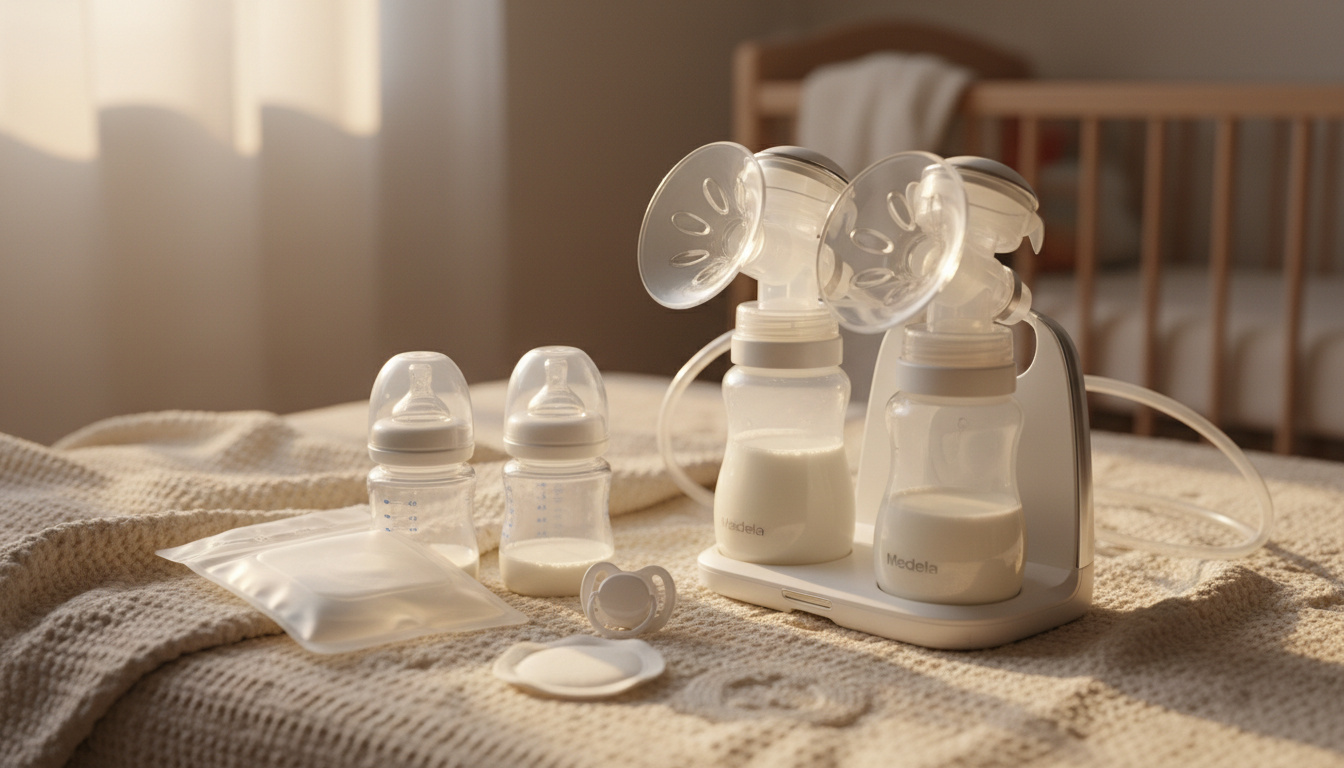
Medela breast pumps utilize proprietary 2-Phase Expression technology engineered to mimic natural infant nursing rhythms through alternating stimulation and expression phases. The Swiss manufacturer produces closed-system electric pumps ranging from clinical-grade hospital units to wearable devices, with standard models featuring BPA-free construction and rechargeable battery compatibility. Current product lineups include the Pump in Style with MaxFlow, Freestyle Hands-Free, Swing Maxi, and the Symphony hospital-grade unit, addressing distinct maternal needs from workplace pumping to postpartum clinical recovery.
Performance specifications vary significantly across the portfolio. The Pump in Style with MaxFlow delivers an 11.8% increase in milk volume through optimized vacuum patterns compared to previous generations, while the Freestyle weighs merely 10 ounces for discrete mobility. Insurance providers frequently cover standard double-electric models at no patient cost, though the hospital-grade Symphony typically requires rental agreements averaging $1-2 daily. Comparative testing demonstrates Medela’s superior suction strength against competitors, correlating with faster breast emptying for low-supply users but increased operational weight and acoustic profiles.
Evaluations from independent laboratories and insurance distributors establish Medela’s market position alongside Spectra and Willow brands, with specific advantages in stimulation efficiency and hospital-performance replication. Selecting the right equipment requires examining model specifications, operational protocols, maintenance requirements, and cost considerations based on verified technical data and user outcome studies.
What Is the Best Medela Breast Pump?
| Top Models | Key Features | Price Range | Best For |
|---|---|---|---|
| Pump in Style with MaxFlow | 2-Phase Expression, MaxFlow Technology | $200-400 (Insurance covered) | Daily home/work use |
| Freestyle Hands-Free | Closed system, App-free operation | $200-400 (Insurance covered) | Travel and mobility |
| Swing Maxi Hands-Free | App-connected tracking | Insurance upgrades available | Tech-integrated pumping |
| Symphony | Hospital-grade suction | Rental $1-2/day | Low supply/clinical use |
- 2-Phase Expression technology alternates between rapid stimulation and slower expression phases to trigger natural let-down reflexes
- Closed-system architecture prevents milk or moisture from entering tubing, reducing contamination risks across all electric models
- Pump in Style with MaxFlow generates an 11.8% milk volume increase through enhanced vacuum cycle speeds
- Symphony hospital-grade units provide the strongest suction capabilities among commercially available pumps, according to comparative testing data
- Freestyle Hands-Free weighs 10 ounces, enabling wearable pumping without external tubing or proprietary app dependencies
- All configurations utilize BPA-free materials with single or double pumping options
- Battery compatibility extends across portable models, supporting outlet-independent operation
| Model | Type | Weight | Battery | Warranty | Key Specification |
|---|---|---|---|---|---|
| Pump in Style with MaxFlow | Double Electric | 1.18 lbs | Rechargeable | 1 Year | Hospital performance, 11.8% output increase, 21mm/24mm shields included |
| Freestyle Hands-Free | Hands-Free Double | 10 oz | Rechargeable | 1 Year | App-free operation, ultra-portable, in-bra fit |
| Swing Maxi Hands-Free | Hands-Free Double | 2.2 lbs | Rechargeable | 1 Year | App-connected session tracking, compact design |
| Magic InBra Wearable | Wearable Double | 3.26 lbs | Rechargeable | 1 Year (pump), 90 days (accessories) | In-bra integration for daily use efficiency |
| Swing | Single Electric | Not specified | Battery-operated | Not specified | Fast let-down trigger, mastitis relief capability |
| Symphony | Hospital-Grade | Heavier | Not specified | Not specified | Maximum suction power for low supply |
Medela Pump in Style vs Freestyle
The Pump in Style with MaxFlow and Freestyle Hands-Free serve distinct operational contexts despite both offering double-pumping capability. Pump in Style weighs 1.18 pounds and includes a comprehensive accessory package containing a transport bag, four bottles, and both 21mm and 24mm breast shields, positioning it as a stationary workstation solution. Insurance coverage frequently includes these complete kits at no cost.
Freestyle reduces physical footprint to 10 ounces through integrated wearable cups that eliminate external tubing, enabling discrete pumping during active mobility. While both models utilize rechargeable batteries, Pump in Style emphasizes milk output efficiency through proprietary MaxFlow vacuum optimization, whereas Freestyle prioritizes physical discretion and app-free autonomy for mobile professionals.
Is Medela Breast Pump Hospital Grade?
Only the Symphony model qualifies as true hospital-grade equipment, featuring suction strength exceeding domestic units and supporting shorter expression sessions for low-supply mothers. Pump in Style with MaxFlow offers “hospital performance” through enhanced vacuum patterns but does not meet identical clinical specifications or FDA classifications. Symphony rentals remain common following hospital discharge, typically costing $1-2 daily compared to the $200-400 purchase price of consumer models. St George Illawarra – NRL Team History and Key Facts
How Do I Use a Medela Breast Pump?
Basic operation requires assembling breast shields, valves, collection bottles, and tubing according to model-specific configurations illustrated in manufacturer video guides. Users initiate the 2-Phase Expression cycle, beginning with rapid stimulation mode to trigger let-down before the pump automatically transitions to slower expression phase. Initial protocols recommend starting with low suction settings, gradually increasing to maximum comfortable vacuum levels. Standard clinical guidelines suggest 15-20 minute sessions approximately eight times daily during exclusive pumping periods.
How to Clean a Medela Breast Pump
Medela’s closed-system design prevents milk from entering tubing in standard operation, directing cleaning focus toward shields, valves, and collection bottles. Components are dishwasher-safe or washable with hot soapy water, requiring thorough air-drying before reassembly to prevent bacterial contamination. The manufacturer recommends weekly sterilization procedures for maintaining clinical hygiene standards. Tubing replacement becomes necessary only if moisture accumulation occurs, though this remains rare in properly functioning closed systems. Backflow protectors and duckbill valves require periodic replacement to maintain suction integrity and prevent performance degradation.
Can I Take a Medela Breast Pump on a Plane?
Transportation Security Administration protocols permit Medela breast pumps as medical devices, exempt from standard liquid restrictions for expressed milk. The Freestyle and Swing Maxi models specifically target travel requirements with rechargeable batteries and compact profiles; Freestyle weighs 10 ounces versus Pump in Style’s 1.18 pounds, significantly reducing carry-on burden. Battery operation proves essential for in-flight use where electrical outlets remain unavailable at passenger seats. Users should prioritize quiet-operating models and hands-free configurations to minimize disruption during flights, though comparative analyses note Medela units run louder than Spectra alternatives.
The Freestyle Hands-Free model operates without proprietary apps, reducing potential technical failures during international travel where connectivity may prove unreliable. Its 10-ounce weight and in-bra fit eliminate the need for dedicated pumping rooms.
Are Medela Breast Pumps Worth It?
Value assessments weigh superior suction capabilities against ergonomic limitations identified in consumer testing. Comparative analyses demonstrate Medela’s strongest vacuum levels among competitors, effectively emptying breasts faster for low-supply users. However, independent reviewers document heavier chassis weights and increased operational noise compared to Spectra S1/S2 units. The 2-Phase Expression technology reliably triggers let-downs, though some users report longer session durations than with rival massage-mode-equipped pumps.
How Much Does a Medela Breast Pump Cost?
Retail pricing ranges from $200-400 for standard double-electric units, with the Pump in Style and Freestyle frequently covered by insurance providers at no patient cost through authorized distributors. Hospital-grade Symphony rentals typically cost $1-2 daily, offering short-term access to clinical suction power without full purchase investment. Insurance-covered packages often include carrying bags, bottles, and standard 21mm/24mm breast shields, adding tangible value beyond the base pump mechanism.
What Are Medela Breast Pump Parts?
Essential components include breast shields (21mm and 24mm standard, with upgrade options available), valves, membranes, tubing, and collection bottles. Shield sizing critically impacts output efficiency, with improper fit representing the primary cause of low suction reports. While 24mm and 28mm alternatives appear in competitive bundles, Medela-specific replacements require manufacturer or insurance supplier sourcing to ensure compatibility. Valve and membrane deterioration primarily determines pump longevity, requiring replacement every few months depending on usage frequency to maintain vacuum seal integrity.
Troubleshooting Common Issues
Low output typically indicates improper shield fit or insufficient suction settings; increasing cycle speed often improves let-down response before abandoning the session. Weak suction frequently results from low battery charge or degraded valves requiring immediate replacement. Tubing contamination remains unlikely in closed-system architecture but requires immediate replacement if moisture appears despite the protective design. Users experiencing persistent stimulation difficulties despite proper assembly may benefit from transitioning to the Symphony’s enhanced power profile available through medical rental channels.
Frequent valve replacement represents the primary maintenance factor extending pump lifespan. Degraded valves reduce suction efficiency significantly before complete failure occurs, often manifesting as gradually lengthening session durations without clear mechanical malfunction.
Most insurance providers cover Pump in Style and Freestyle models at no cost, though specific accessory packages vary by supplier. Hospital-grade Symphony units rarely qualify for permanent insurance coverage, requiring rental agreements instead.
Rich River Golf Club – Courses, Fees, Reviews & Booking Guide For more information on Medela breast pumps, check out this guide to convert photos to PDF online.
The Evolution of Medela Breast Pump Technology
- : Clinical testing establishes Medela’s suction superiority against Spectra and Willow pumps, documenting measurable advantages for low-supply mothers requiring intensive emptying.
- : Insurance providers standardize coverage for Pump in Style and Freestyle models, incorporating complete accessory packages including transport bags and multiple shield sizes.
- : Launch of Freestyle Hands-Free introduces sub-10-ounce wearable technology, eliminating external tubing for completely mobile pumping scenarios.
- : Introduction of Swing Maxi Hands-Free integrates smartphone connectivity for session tracking while maintaining 2.2-pound portability.
- : Pump in Style with MaxFlow receives vacuum optimization updates, claiming 11.8% milk volume increases through enhanced cycle speeds.
- : Magic InBra Wearable debuts with 3.26-pound integrated bra design, targeting daily use efficiency through discrete in-garment integration.
- : Laboratory studies confirm high cycle speed configurations significantly reduce let-down times across Medela’s electric lineup.
Understanding Hospital-Grade Classification
| Established Information | Unclear or Variable Factors |
|---|---|
| The Symphony model delivers the strongest suction among tested pumps, meeting clinical hospital-grade specifications for low-supply intervention and postpartum recovery. | FDA classification distinctions between “hospital-grade” and “hospital performance” marketing terminology remain ambiguous for consumer models like Pump in Style with MaxFlow. |
| Pump in Style with MaxFlow utilizes closed-system architecture preventing milk contamination in tubing through physical barrier mechanisms. | Individual milk output results vary significantly based on maternal physiology, with the claimed 11.8% increase representing statistical averages rather than guaranteed personal outcomes. |
| All models utilize BPA-free materials and offer 1-year standard warranties (90 days for wearable accessories like the Magic InBra). | Long-term durability comparisons against competitors lack standardized testing protocols beyond user-reported longevity anecdotes. |
Medela in the Competitive Landscape
Medela occupies a distinct market position emphasizing suction power over acoustic discretion or ergonomic minimalism. Comparative analyses demonstrate the brand’s vacuum strength exceeds Spectra S1/S2 configurations, though this correlates with increased operational weight and noise levels documented at 2.9 pounds for competing units. While Spectra offers gentler massage modes and rechargeable convenience, Medela’s 2-Phase Expression provides a “pulling” sensation mimicking infant nursing rather than vibration-based stimulation.
Output studies indicate similar milk volumes between brands for average users, though low-supply mothers frequently report superior emptying with Medela’s intensive suction profiles. The selection calculus ultimately reflects prioritization between clinical efficiency and ergonomic comfort, with Medela favoring the former through hardware emphasizing raw performance metrics over user interface refinement or acoustic dampening.
Expert and User Perspectives
Medela pumps simply get the job done with powerful suction that empties faster for low supply, though the 2-Phase technology feels more like a baby’s natural pull compared to Spectra’s vibration-based approach.
Mommy Labor Nurse comparative analysis
The Symphony provided the strongest suction among all pumps tested, making it ideal for mothers struggling with production volumes immediately following hospital discharge.
Fairly Curated product testing
Users consistently report quick let-downs with Medela’s stimulation phase, though the units run heavier and noisier than comparable Spectra models, creating distinct tradeoffs for daily use.
Milk N Mamas Baby brand comparison
Final Considerations
Selecting appropriate Medela equipment requires matching technical specifications to specific lifestyle demands: the Pump in Style with MaxFlow serves stationary users prioritizing output efficiency and comprehensive accessory inclusion, while Freestyle configurations accommodate mobile professionals requiring discrete operation and minimal carry weight. Insurance coverage frequently eliminates cost barriers for standard models, though Symphony rentals remain necessary for clinical-grade suction requirements. Maintenance demands remain minimal through closed-system engineering, though vigilant valve replacement ensures sustained performance across the product lifespan.
Frequently Asked Questions
How long do Medela breast pumps last?
With proper valve and membrane maintenance, Medela pumps typically operate effectively for multiple years of regular use. Closed-system designs minimize internal contamination that degrades motor performance over time.
Can Medela parts be used with Spectra pumps?
Standard Medela breast shields and bottles utilize distinct threading and flange designs incompatible with Spectra hardware without third-party adapters. Users should source Medela-specific replacement parts through authorized suppliers.
How often should I replace Medela valves?
Valves and membranes require replacement every few months depending on usage frequency, or immediately upon observing reduced suction strength or visible material fatigue.
Is the Medela Symphony available for purchase?
The Symphony typically requires rental agreements through medical supply companies or hospitals at approximately $1-2 daily, as the hospital-grade classification targets short-term postpartum support rather than permanent ownership.
Do Medela pumps require special cleaning solutions?
Standard hot soapy water or dishwasher cycles sufficiently clean Medela components. Weekly sterilization is recommended, though harsh chemical solutions may degrade valve materials.
Related stories




Liam O'Brien covers Australian politics and public affairs for Southern Pulse.