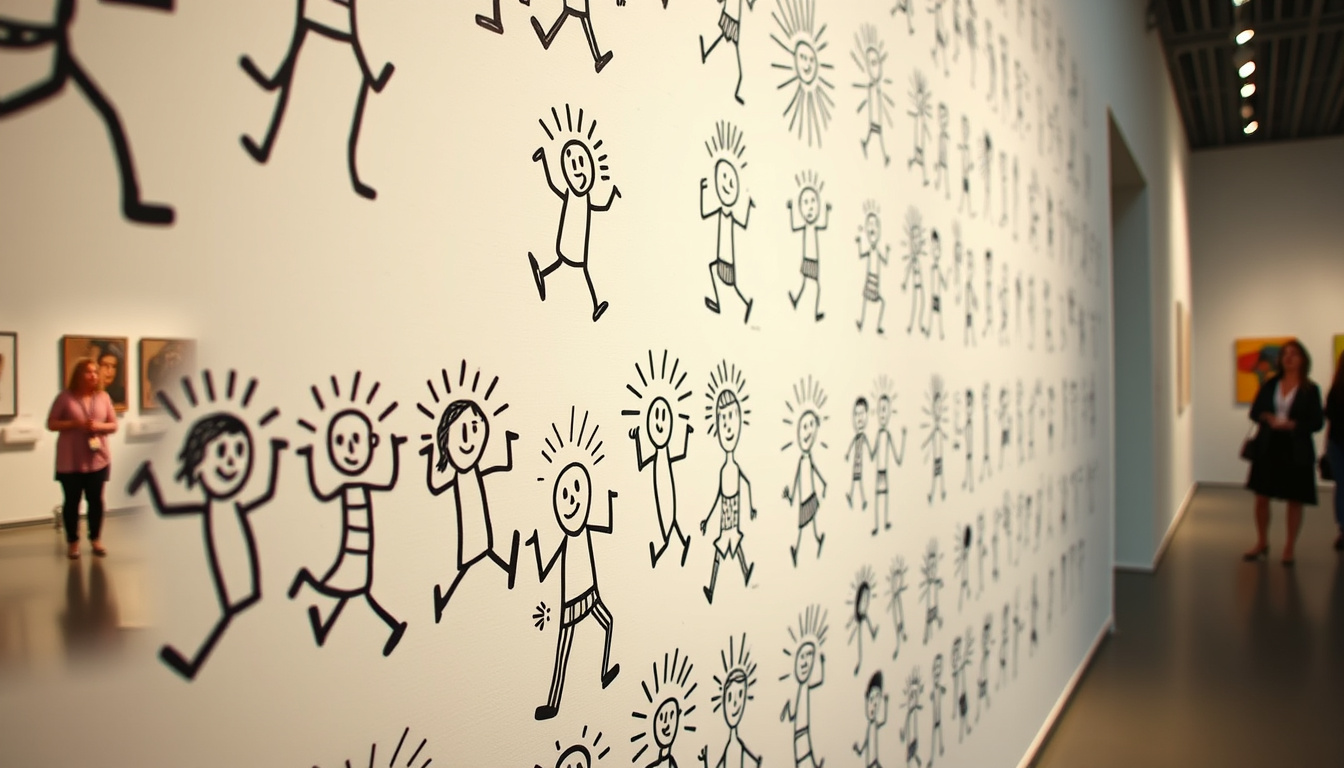
There’s something about a black-and-white drawing on a subway wall that makes you stop; Keith Haring’s simple, bold figures have become universal symbols of joy, protest, and vulnerability. With more than 50 public artworks created between 1980 and 1989, his reach extended far beyond any gallery, and this article connects the dots between his chalk-on-concrete origins, his activism, and the market forces that keep his legacy alive.
Born: May 4, 1958, Reading, Pennsylvania ·
Died: February 16, 1990, New York City ·
Number of public artworks (1982-1989): More than 50 ·
Most expensive work sold: Untitled (1982) for $6.5 million (2021)
Quick snapshot
- Haring died of AIDS in 1990 (Keith Haring Foundation)
- He was an openly gay artist (Tate)
- His most expensive painting sold for $6.5 million (Sotheby’s)
- He created over 50 public artworks (Sotheby’s)
- Exact details of his relationship timeline with Juan Dubose are not fully documented
- Total number of original works in circulation is not precisely known
- The exact value of his estate is not publicly disclosed
- The number of forgeries in circulation is unknown
- 1978 – Moved to New York, studied at School of Visual Arts (Keith Haring Foundation)
- 1980-1985 – Subway chalk drawings (Sotheby’s)
- 1986 – Opened the Pop Shop in SoHo (Tate)
- 1989 – Established Keith Haring Foundation (Keith Haring Foundation)
- 1990 – Died of AIDS-related complications (Keith Haring Foundation)
- The Keith Haring Foundation continues to grant to AIDS and children’s charities
- Licensing of his imagery on apparel and merchandise remains strong
- Retrospectives and exhibitions are held regularly worldwide
Five key facts, one pattern: Haring’s life and work are tightly bound to a set of verifiable milestones that explain both his artistic evolution and his enduring market value.
| Category | Detail |
|---|---|
| Full name | Keith Allen Haring |
| Birth date | May 4, 1958 |
| Death date | February 16, 1990 |
| Known for | Graffiti art, pop art, social activism |
| Estate manager | Keith Haring Foundation |
Why Is Keith Haring’s Art So Popular?
Accessible subway drawings
- Starting in 1980, Haring used empty black advertising panels in New York subway stations as his canvas (Sotheby’s (auction house)).
- He created hundreds of white-chalk drawings that commuters encountered daily, making art a part of ordinary life.
- This public exposure built a massive audience outside the traditional gallery system.
Bold, simple visual language
- Haring developed a graphic style centered on the primacy of the line, with motifs including dancing figures, radiant babies, barking dogs, and flying saucers (Sotheby’s).
- The Radiant Baby, his most recognized symbol, was used as his tag while he was a subway artist (Wikipedia (encyclopedia)).
- According to MyArtBroker, Haring described the Radiant Baby as “the purest and most positive experience of human existence” (MyArtBroker (art marketplace)).
Activism and social messages
- Tate notes that Haring’s work responded to apartheid, the AIDS epidemic, drug abuse, and gay rights (Tate).
- He created the “Crack Is Wack” mural in Harlem as a statement against drug addiction (Sotheby’s).
- His Ignorance = Fear poster from 1989 promoted safe sex and AIDS awareness.
The implication: Haring’s ability to merge public art with activism created a lasting cultural footprint that drives both admiration and market value.
What Is Keith Haring’s Most Meaningful Art?
Unfinished Painting (1989)
- This piece comments on the AIDS crisis by leaving half the canvas unpainted, symbolizing lives cut short.
- MyArtBroker reports that the baby motif later appeared in darker contexts involving Kaposi’s sarcoma imagery (MyArtBroker).
The Crack Is Wack mural (1986)
- Painted on a handball court in Harlem, it directly addresses the crack cocaine epidemic.
- The mural was declared a New York City landmark and remains one of his most visited public works.
Ignorance = Fear (1989)
- This poster features figures covering their eyes, ears, and mouth, with the message that silence about AIDS equals danger.
- Tate includes it as a prime example of Haring using art to fight stigma (Tate).
For collectors, these works carry the highest emotional and historical weight. For educators, they are primary documents of the 1980s social landscape. The market rewards meaning: pieces directly tied to Haring’s activism consistently command premium prices at auction.
What this means: These pieces represent the intersection of Haring’s personal convictions and public expression, making them central to understanding his legacy.
How Much Is an Original Keith Haring Painting Worth?
Market value range
- Original paintings can range from $10,000 to several million dollars depending on size, rarity, and provenance.
- Prints are more accessible, often available for hundreds to a few thousand dollars.
Auction record: Untitled (1982)
- Haring’s most expensive painting to date is Untitled (1982), which sold for $6.5 million at Sotheby’s in 2021 (Sotheby’s).
- The price reflected both the rarity of large-scale works on canvas and Haring’s growing posthumous market.
Factors affecting price
- Authentication is handled by the Keith Haring Foundation; works without proper documentation sell for significantly less.
- Provenance, condition, and subject matter (activist themes tend to attract higher bids) all play a role.
The catch: For first-time buyers, the authentication bottleneck means that prices for unverified works are erratic. For serious investors, foundation-authenticated pieces offer more stability, but the entry point is now well above $50,000 for any canvas with a known exhibition history.
Did Keith Haring Have a Partner and Was He LGBTQ?
Relationship with Juan Dubose
- Haring had a partner named Juan Dubose, though the exact timeline of their relationship is not fully documented (Tate).
- Dubose was a dancer and part of New York’s downtown scene.
Haring’s identity as an openly gay artist
- Both Tate and Wikipedia describe Haring as openly gay (Tate, Wikipedia).
- His activism included LGBTQ rights, and his dancing figure motif is often interpreted as celebrating gay club culture (MyArtBroker).
While Haring’s openness about his sexuality made him a target during the 1980s backlash, it also cemented his role as a gay icon. For contemporary LGBTQ audiences, his work carries an authenticity that commercial pop art rarely matches.
The implication: Haring’s personal identity enriches the interpretation of his art, adding layers of authenticity that resonate with marginalized communities.
Who Inherited Keith Haring’s Estate?
The Keith Haring Foundation
- In 1989, one year before his death, Haring established the Keith Haring Foundation to manage his estate and carry on his philanthropic work (Keith Haring Foundation).
- The foundation holds copyright, authenticates works, and licenses imagery.
Purpose of the foundation
- Grants support AIDS organizations and children’s charities (Keith Haring Foundation).
- The foundation also funds exhibitions and educational programs to expand the audience for Haring’s work.
The implication: For anyone buying or selling Haring’s art, the foundation acts as the gatekeeper of authenticity and the primary source of official knowledge about his life and legacy. That centralization adds security for collectors but also creates a single point of control over the market.
Timeline
Haring moved to New York City and enrolled at the School of Visual Arts (Keith Haring Foundation).
He created hundreds of subway chalk drawings in New York stations (Sotheby’s).
Opened the Pop Shop in SoHo, selling affordable merchandise (Tate).
Painted Unfinished Painting and established the Keith Haring Foundation (Keith Haring Foundation).
Died of AIDS-related complications at age 31 (Keith Haring Foundation).
Confirmed facts
- Haring died of AIDS in 1990 (Keith Haring Foundation)
- He was an openly gay artist (Tate)
- His most expensive painting sold for $6.5 million (Sotheby’s)
- He created over 50 public artworks (Sotheby’s)
- The Keith Haring Foundation manages his estate (Keith Haring Foundation)
What’s unclear
- Exact timeline of his relationship with Juan Dubose is not fully documented
- Total number of original works in circulation is not precisely known
- The exact value of his estate is not publicly disclosed
- The number of forgeries in circulation is unknown
“The purest and most positive experience of human existence” – Haring described his Radiant Baby motif in these terms.
The Keith Haring Foundation “is committed to supporting organizations that assist children and people with HIV/AIDS, and to expanding the audience for Haring’s work through exhibitions, publications, and licensing.”
Keith Haring Foundation (estate manager)
For the casual enthusiast, Haring’s art is a doorway to the 1980s downtown scene. For the collector, it is a market that rewards both emotional resonance and authentication clarity. For the activist, his legacy remains a call to use creativity in the fight against injustice. The choice is simple: engage with the work on its own terms, or risk reducing it to a logo on a T-shirt.
Related reading: Tinker Bell: Origin, Symbolism, and Evolution from Barrie to Disney · Charlie Brown: Story, Characters, Mental Health & TV History
For a deeper look into his journey from subway drawings to global fame, explore Keith Harings life and art and its lasting impact on the art market.
Frequently asked questions
What causes Keith Haring’s style to be so recognizable?
His use of bold black outlines, bright primary colors, and repeating symbolic figures like the radiant baby and barking dog creates an instantly identifiable visual vocabulary. MyArtBroker notes that the primacy of the line was central to his approach (MyArtBroker).
Where can I see Keith Haring’s murals today?
Many survive in New York, including the “Crack Is Wack” mural in Harlem and works in the subway. The Keith Haring Foundation also documents outdoor murals globally.
How do I identify an authentic Keith Haring print?
Authentic prints are often numbered, signed, and stamped by the Keith Haring Foundation. Always request a certificate of authenticity from a reputable dealer.
What materials did Keith Haring use for his subway drawings?
He used white chalk on the blank black paper of unused advertising spaces. He also used markers, spray paint, and acrylic for other works.
Why did Keith Haring open the Pop Shop?
He wanted to make his art affordable and accessible. The Pop Shop sold T-shirts, posters, and other items with his designs, a move that commercialized his work but also fulfilled his mission of art for everyone (Tate).
What charities does the Keith Haring Foundation support?
The foundation primarily supports AIDS organizations and children’s charities, especially those serving at-risk youth and people living with HIV/AIDS (Keith Haring Foundation).
How did Keith Haring influence contemporary street art?
His public chalk drawings paved the way for street artists like Banksy and Shepard Fairey. His combination of simple imagery with political messages is now a standard approach in urban art.

Ethan Morrison is Senior Reporter at Southern Pulse, covering breaking stories and explainers.