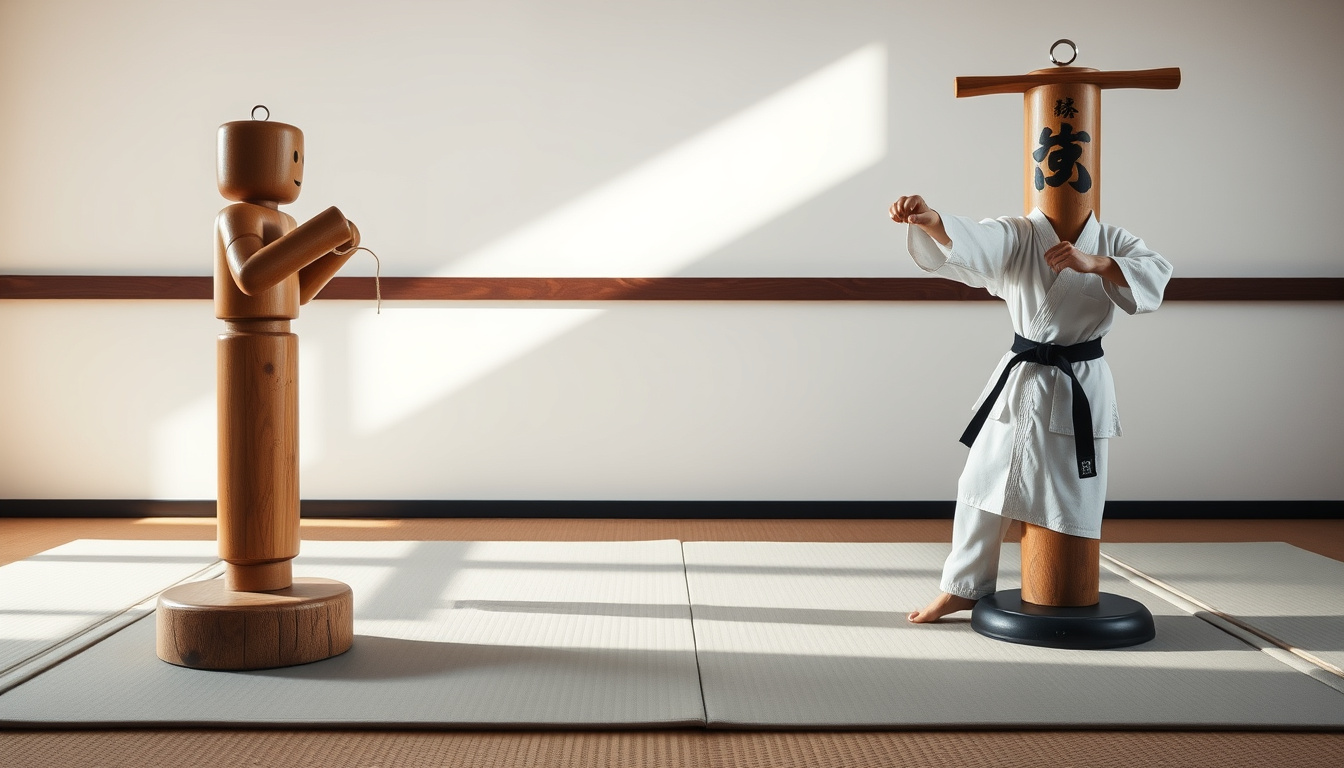
If you’ve ever asked yourself whether Kung Fu or Karate would serve you better in a real situation, you’re not alone. The two are often lumped together as “martial arts,” but their origins, techniques, and philosophies differ enormously.
Origin of Kung Fu: China, over 4,000 years of history ·
Origin of Karate: Okinawa, Japan, 19th century ·
Number of Kung Fu styles: Hundreds ·
Number of Karate styles: Four main
Quick snapshot
- Kung Fu originated in China (Encyclopaedia Britannica (reference work))
- Karate originated in Okinawa, Japan (Encyclopaedia Britannica (reference work))
- Bruce Lee was a famous Kung Fu practitioner and actor (Encyclopaedia Britannica (reference work))
- Which martial art is definitively “better” for self-defense depends on style, training, and context (Head Academy (martial arts training resource))
- Exact number of Kung Fu styles is unknown, estimates range in the hundreds (Encyclopaedia Britannica (reference work))
- Whether traditional forms training alone prepares a student for a real fight (Head Academy (martial arts training resource))
- Earliest records of Chinese martial arts date to c. 2000 BCE (Encyclopaedia Britannica (reference work))
- Modern Karate developed in Okinawa during the 19th century (Encyclopaedia Britannica (reference work))
- Both arts remain globally popular, with growing interest in mixed martial arts cross-training (Head Academy (martial arts training resource))
- Traditional schools increasingly incorporate reality-based self-defense drills (Tri-City Judo (martial arts commentary))
The table below summarizes key differences between Kung Fu and Karate.
| Fact | Kung Fu | Karate |
|---|---|---|
| Origin | China, over 4,000 years of history (Encyclopaedia Britannica (reference work)) | Okinawa, Japan, 19th century (Encyclopaedia Britannica (reference work)) |
| Number of styles | Hundreds (Encyclopaedia Britannica (reference work)) | Four main (Shotokan, Goju-ryu, Shito-ryu, Wado-ryu) |
| Famous practitioner | Bruce Lee (Encyclopaedia Britannica (reference work)) | Chuck Norris |
| Famous film | Enter the Dragon (1973) | The Karate Kid (1984) |
| Movement philosophy | Circular, fluid, adaptable (Head Academy (martial arts training resource)) | Linear, direct, powerful (Head Academy (martial arts training resource)) |
Is Karate or kung fu better?
Key differences between Karate and Kung Fu
- Karate emphasizes linear strikes and power generation through hip rotation (Head Academy (martial arts training resource))
- Kung Fu includes circular movements, joint locks, throws, and a broader variety of techniques (Head Academy (martial arts training resource))
- Karate training commonly uses forms (kata) and sparring (kumite) (YouTube video ‘Every Martial Art Type Explained in 12 Minutes’)
- Kung Fu training varies widely by style — some schools focus on forms and tradition, others on practical sparring (Head Academy (martial arts training resource))
Which martial art is more effective for self-defense?
- Effectiveness depends on the specific style, the quality of instruction, and the frequency of realistic sparring, not the label alone (Tri-City Judo (martial arts commentary))
- Some argue Karate’s emphasis on repeatable straight-line power makes it efficient for striking exchanges (Head Academy (martial arts training resource))
- Kung Fu’s wider technical range — including grappling and weapon work — can offer more options in messy scenarios (Tri-City Judo (martial arts commentary))
The implication: the choice between Karate and Kung Fu should be based on your training goals and the school’s emphasis on sparring.
What exactly is kung fu?
Definition of Kung Fu
“’Kung fu’ is not a single martial art but a broad Chinese term often used to refer to many Chinese martial arts styles.”
— Encyclopaedia Britannica (reference work)
In Chinese contexts, the preferred umbrella term is “Chinese martial arts” or “wushu.” Kung Fu as an international label includes everything from Shaolin kung fu to Wing Chun to Tai Chi. (Encyclopaedia Britannica (reference work))
Common styles of Kung Fu
- Shaolin Kung Fu: One of the oldest institutional styles, originating from the Shaolin Temple
- Wing Chun: Known for close-range combat and rapid punching (YouTube video ‘Every Martial Art Type Explained in 12 Minutes’)
- Tai Chi: An internal style focused on slow, deliberate movements and internal energy
- Changquan: Long-range, flowing movements, often seen in modern wushu performances
Kung Fu’s diversity is its greatest strength and its biggest confusing factor. A Wing Chun practitioner and a Tai Chi practitioner share the label “Kung Fu” but train for completely different scenarios.
The catch: without live sparring, even the most varied style may fail under pressure.
Can Kung Fu be used in a real fight?
Real-world applicability of Kung Fu
Yes — but with caveats. Many traditional Kung Fu schools emphasize forms and conditioning over live sparring, which can leave students unprepared for the chaos of a real altercation. However, styles that incorporate pressure testing — like some schools of Wing Chun, Sanda (Chinese kickboxing), and Shuai Jiao (Chinese wrestling) — are used effectively in competition and self-defense. (Head Academy (martial arts training resource))
Comparison with other martial arts for self-defense
“A common practical distinction in self-defense discussions is that karate schools often stress repeatable straight-line power generation, while kung fu schools may stress a wider variety of body mechanics and responses.”
— Head Academy (martial arts training resource)
The implication: if your self-defense scenario is a sudden striking exchange in an open space, Karate’s linear power may give you the edge. If the fight goes to the ground or involves multiple attackers, Kung Fu’s grappling and sweeps could be more useful. No single art covers every situation.
The key variable is not the art but the training method. Look for schools that include regular, full-speed sparring with contact.
The pattern: effective self-defense depends more on how you train than on which art you choose.
Why was Kung Fu banned in China?
Historical context of the ban
During the Cultural Revolution (1966–1976), traditional practices including Kung Fu were suppressed by the Communist government as part of a campaign against “feudal” and “bourgeois” elements. Martial arts schools were closed, and practitioners faced persecution. (Encyclopaedia Britannica (reference work))
Impact on Kung Fu practice
The ban forced many masters to teach secretly or flee. After Mao Zedong’s death and the end of the Cultural Revolution in the late 1970s, the ban was lifted and Kung Fu experienced a revival. However, some lineages and knowledge were lost during that period. (Encyclopaedia Britannica (reference work))
What this means: history reminds us that martial arts are not immune to larger political forces, and preserving authentic lineages requires active effort.
Who is more skilled, Bruce Lee or Jackie Chan?
Comparison of their martial arts backgrounds
- Bruce Lee developed his own philosophy, Jeet Kune Do, which blended Wing Chun, Western boxing, and fencing, emphasizing speed and efficiency (Encyclopaedia Britannica (reference work))
- Jackie Chan trained in Peking opera school, which included acrobatics, martial arts, and performance, leading to his signature comedic, highly flexible fighting style
Contributions to martial arts and film
“Bruce Lee was a pioneer of Jeet Kune Do and globalized Kung Fu through films like Enter the Dragon.”
— Encyclopaedia Britannica (reference work)
Jackie Chan brought Kung Fu to mainstream audiences with a unique blend of humor and death-defying stunts. Both are extraordinary athletes, but their skill sets differ: Lee was a combat philosopher and fighter, Chan a performer and stunt artist. Comparing them is like comparing a sprinter to a gymnast — both world-class, but in different sports.
If you want to study martial arts for fighting effectiveness, Bruce Lee’s approach is more applicable. If you want a dynamic, entertaining workout that emphasizes body control and showmanship, Jackie Chan’s style offers a unique path.
The implication: your choice of role model should match your goals — Lee for combat efficiency, Chan for performance and fitness.
Comparison table: Kung Fu vs Karate at a glance
Six dimensions, one clear pattern: the arts complement each other but serve different priorities.
| Dimension | Kung Fu | Karate |
|---|---|---|
| Primary origin | China | Okinawa, Japan |
| Historical period | c. 2000 BCE onwards | 19th century |
| Striking philosophy | Circular, fluid, varied (Head Academy) | Linear, direct, powerful (Head Academy) |
| Technique breadth | Strikes, kicks, joint locks, throws, weapon work (Head Academy) | Punches, kicks, knee/elbow strikes, blocks (YouTube) |
| Training methods | Forms, partner drills, sparring (varies by school) (Head Academy) | Kata, kumite, self-defense drills (Britannica) |
| Global identity | Umbrella term, catch-all label | Specific art with standardized belt system (YouTube) |
Timeline of Kung Fu and Karate
Five milestones show how these arts evolved from ancient practice to global phenomenon.
| Date/Period | Event | Source |
|---|---|---|
| Earliest records of Chinese martial arts | Encyclopaedia Britannica (reference work) | |
| 19th century | Development of modern Karate in Okinawa | Encyclopaedia Britannica (reference work) |
| 1960s–1970s | Bruce Lee popularizes Kung Fu globally | Encyclopaedia Britannica (reference work) |
| 1984 | The Karate Kid film boosts Karate’s popularity | General knowledge |
| 2020s | Both arts remain popular; cross-training with MMA grows | General knowledge |
What we know and what remains unclear
Confirmed facts
- Kung Fu originated in China and has over 4,000 years of recorded history (Encyclopaedia Britannica (reference work))
- Karate originated in Okinawa and developed in the 19th century (Encyclopaedia Britannica (reference work))
- Bruce Lee was a pioneer of Jeet Kune Do and a global martial arts icon (Encyclopaedia Britannica (reference work))
- Karate means “empty hand” and emphasizes unarmed striking (Encyclopaedia Britannica (reference work))
- Kung Fu includes both external (hard) and internal (soft) styles
What’s unclear
- Which art is universally better for self-defense — it depends on style and training context
- Exact number of Kung Fu styles — estimates vary from a few dozen to several hundred
- Whether traditional forms training alone prepares a student for a real fight
- How much of each art’s reputation is driven by Hollywood versus actual combat effectiveness
Frequently asked questions
Is Kung Fu effective for self-defense?
Yes, but effectiveness depends on the style and training. Schools that include regular live sparring produce more capable self-defense practitioners.
How long does it take to learn Kung Fu?
Basic proficiency can take 1–2 years of regular training, but mastery takes a lifetime. Many styles have no standardized belt system.
What are the best Kung Fu movies?
Enter the Dragon (1973), Police Story (1985), and Ip Man (2008) are iconic. Bruce Lee and Jackie Chan films are a great starting point.
Is Karate or Kung Fu better for beginners?
Karate’s structured curriculum and belt system often makes it more beginner-friendly. Kung Fu can be harder to navigate due to the diversity of styles.
Can Kung Fu be used in MMA?
Some Kung Fu techniques (especially Sanda, which incorporates kickboxing and takedowns) are used in MMA. Traditional forms alone are rarely sufficient.
What is the hardest martial art to learn?
Hard depends on criteria. Kung Fu’s variety can be overwhelming; Karate’s repetition can be grueling. Both require years of dedication.
For anyone choosing between Kung Fu and Karate, the decision is less about the label and more about the school. The best martial art is the one you will train consistently with realistic sparring. For readers in the US or Europe seeking self-defense, a school that pressure-tests its techniques — regardless of whether it hangs a “Kung Fu” or “Karate” sign — will serve you better than a traditional school that never spars. Either path leads to greater confidence and physical competence; the wrong path leads to false confidence.
Related reading: Kung Fu vs Karate comparison

Liam O'Brien covers Australian politics and public affairs for Southern Pulse.