
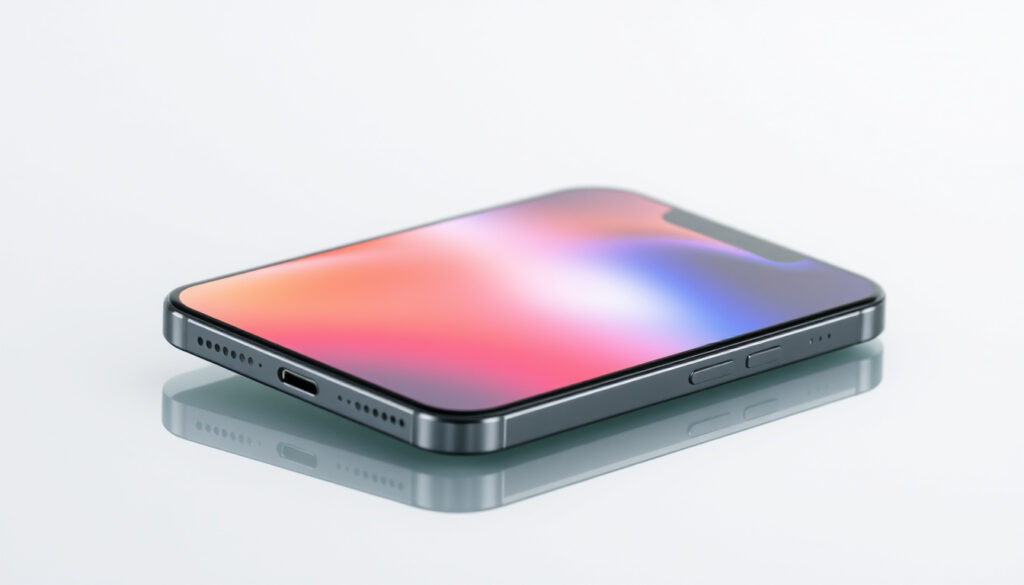
Apple’s new entry-level smartphone, the iPhone 16e, officially launched on February 28, 2025, marking a significant shift in the company’s budget lineup strategy. The device arrived as the successor to the iPhone SE (3rd generation), though it carried a new naming convention that aligned it directly with the iPhone 16 family rather than continuing the SE branding.
The announcement came on February 19, 2025, when Apple confirmed the device would be available for pre-order just two days later. At $599 for the base 128GB model, the iPhone 16e positioned itself between the discontinued SE line and the standard iPhone 16, offering modern features like Apple Intelligence and a 48-megapixel camera system at a more accessible price point. The timing followed years of industry speculation about what many had referred to as the “iPhone SE 4” or “budget iPhone 2025.”
Those interested in broader smartphone purchasing guidance may find our related resource on technology decisions helpful when evaluating options in this price range. The iPhone 16e’s release also reflected broader market trends, as manufacturers increasingly focused on delivering premium features at mid-range pricing to capture cost-conscious consumers.
What Is the iPhone 16e?
The iPhone 16e represents Apple’s redefined approach to entry-level smartphones. Rather than maintaining the older iPhone SE branding with its legacy design elements, Apple chose to integrate this device into the iPhone 16 family, signaling that budget-conscious consumers could now access the company’s latest technology ecosystem without stepping down to aging hardware specifications.
Industry observers had tracked this device extensively under various names. Analysts such as Ming-Chi Kuo reported on supply chain indicators suggesting mass production would begin in early 2025. Leakers referenced the internal codename “D93” and described styling consistent with the iPhone 16 lineup. The shift from “SE 4” to “16e” branding ultimately confirmed what Apple had been signaling about consolidating its product family structure.
Key Insights About the iPhone 16e
- First Apple smartphone to feature the company’s custom C1 cellular modem, designed for efficiency across 5G networks
- Introduces Apple Intelligence support, bringing AI-powered features previously limited to higher-end models
- Replaces the traditional mute switch with a customizable Action button, a feature shared with the iPhone 16 family
- Adopts USB-C connectivity, standardizing charging across Apple’s current iPhone lineup
- Discontinues Touch ID entirely, marking the end of fingerprint authentication on iPhones
- Offers battery life up to 12 hours longer than any previous iPhone SE generation
- Ships with iOS 18.3 and supports third-party app integrations within the Control Center
iPhone 16e Specifications Compared to Previous SE Models
| Feature | iPhone 16e (2025) | iPhone SE 3 (2022) |
|---|---|---|
| Display | 6.1-inch Super Retina XDR OLED | 4.7-inch LCD |
| Processor | A18 (4 GPU cores) + C1 modem | A15 Bionic |
| Camera | 48MP 2-in-1 with 1x/2x zoom | 12MP single lens |
| Battery | Best-ever for 6.1-inch model | Significantly shorter runtime |
| Starting Price | $599 (128GB) | $429 (64GB) |
| Authentication | Face ID only | Touch ID |
| Port | USB-C | Lightning |
| AI Features | Apple Intelligence | Not supported |
When Is the iPhone 16e Release Date?
Apple officially announced the iPhone 16e on February 19, 2025, through its newsroom channel. The announcement included detailed specifications, pricing information, and the confirmed timeline for availability. This direct-to-consumer reveal replaced the traditional launch event format that Apple had used for previous SE models, reflecting perhaps the device’s positioning as a quieter addition to an already-announced family lineup.
Pre-Order and Availability Timeline
Pre-orders opened on February 21, 2025, giving customers just two days between announcement and the ability to secure their device. The official release date followed on February 28, 2025, when the iPhone 16e became available in Apple Store locations and through authorized resellers across 59 countries. This included major markets such as the United States, United Kingdom, China, India, and Japan, matching the international rollout pattern established by the iPhone 16 family earlier in 2024.
The rapid turnaround from announcement to release—under two weeks—suggested Apple’s confidence in manufacturing readiness and supply chain management. By positioning the launch in late February, Apple also created clear separation from its flagship September release window while still generating consumer interest during a traditionally quieter period for smartphone announcements.
Apple’s decision to launch in late February rather than following the traditional spring cycle for SE devices may reflect strategic timing to capture consumers considering upgrades from older models during winter shopping periods.
What Are the iPhone 16e Specs and Features?
The iPhone 16e brings substantial hardware improvements over its SE predecessors, centering on a display overhaul that represents the most significant visual upgrade in Apple’s entry-level offering in years. The 6.1-inch Super Retina XDR OLED panel delivers edge-to-edge design with a notch housing Face ID sensors, replacing the compact 4.7-inch LCD that had defined SE displays since 2020.
Processing and Performance
At the core of the iPhone 16e lies the A18 chip, though configured with four GPU cores rather than the five found in the standard iPhone 16. This configuration still provides substantial performance improvements over the A15 Bionic that powered the iPhone SE 3. The device also introduces Apple’s custom C1 cellular modem, marking the first time Apple has deployed internally designed modem hardware in an iPhone. Industry observers had anticipated this move for several years, with supply chain analyst Ming-Chi Kuo documenting production intentions well before the official announcement.
Camera System
Photography capabilities receive a major boost through the 48-megapixel 2-in-1 Fusion camera system. This single-lens solution provides both standard 1x wide-angle capture and 2x optical-quality zoom by leveraging the sensor’s high resolution for cropping. This approach mirrors technology Apple introduced in earlier iPhone Pro models and delivers photography flexibility previously unavailable in the SE lineup. Video recording supports HDR content, while computational photography features enhance low-light performance and detail preservation.
The 48MP camera sensor enables what Apple terms “optical quality” 2x zoom by cropping from the full sensor resolution. While not a true optical telephoto lens, this technique provides sharper results than digital zoom on lower-resolution sensors.
Battery and Power Management
Battery performance represents one of the most tangible improvements for SE upgraders. Apple claims the iPhone 16e delivers the best battery life ever achieved in a 6.1-inch iPhone model, lasting up to 6 hours longer than the iPhone 11 and an impressive 12 hours longer than any iPhone SE generation. Combined with the efficiency gains from the C1 modem, these improvements address one of the most persistent criticisms of the older SE design.
Software and Intelligence Features
The iPhone 16e ships with iOS 18.3 and is updatable to iOS 18.3.1 at launch. Critically, the device supports Apple Intelligence, bringing AI-powered features to the entry-level market for the first time. These capabilities include advanced photo editing tools, voice transcription services, and enhanced Siri interactions. The inclusion means budget-conscious consumers no longer need to purchase flagship Pro models to access Apple’s artificial intelligence ecosystem.
Design, Controls, and Connectivity
Physical design elements align the 16e with modern iPhone aesthetics. The Action button replaces the traditional mute switch, allowing users to assign custom functions such as launching the camera, activating the flashlight, or triggering accessibility features. The USB-C port has become standard across the current iPhone range, and the 16e follows this convention. Available in matte black and white finishes, the device offers colorful case options for personalization without affecting the underlying hardware color options.
How Much Will the iPhone 16e Cost?
The iPhone 16e launched with a starting price of $599 for the 128GB configuration, positioning it $170 above the iPhone SE 3’s $429 entry point but below the standard iPhone 16 pricing. Apple introduced this price tier deliberately, offering modern technology without requiring customers to invest in flagship specifications they may not need.
Storage Options and Pricing Structure
| Storage Capacity | Retail Price | Monthly Payment (24 months) |
|---|---|---|
| 128GB | $599 | $24.95 |
| 256GB | Not specified | Not specified |
| 512GB | Not specified | Not specified |
Availability of Color and Storage Variants
Apple offers the iPhone 16e in two base finishes: black and white, both featuring matte glass surfaces. Storage configurations include 128GB, 256GB, and 512GB options, with pricing scaling accordingly for higher capacities. Unlike the standard iPhone 16, which comes in five colors including pink, teal, and ultramarine, the 16e limits base finishes to these two neutral tones, though Apple’s ecosystem of colorful cases allows for personalization.
iPhone 16e vs iPhone 16: Key Differences?
Understanding the distinction between the iPhone 16e and the standard iPhone 16 requires examining where Apple applied feature differentiation to justify the price gap while ensuring the budget model remained competitive. Both devices share the A18 chip architecture and support for Apple Intelligence, but the configurations and hardware specifications reveal important distinctions.
Processor Configuration Differences
The iPhone 16e utilizes an A18 chip with four GPU cores, while the iPhone 16 features the same A18 processor with five GPU cores. This single-core difference may impact intensive graphics tasks such as gaming and video editing, though everyday applications should perform similarly. The 16e introduces Apple’s custom C1 cellular modem, whereas the iPhone 16 employs a Snapdragon X71 5G modem from Qualcomm. Industry observers noted this as Apple’s initial step toward reducing dependency on external modem suppliers.
Display and Camera Variations
Both devices feature 6.1-inch displays, but the 16e uses a traditional notch design housing Face ID components, while the iPhone 16 incorporates the Dynamic Island introduced in the iPhone 14 Pro generation. The camera systems differ more substantially—the iPhone 16 includes an advanced dual-lens setup with ultra-wide capability, while the 16e offers a single 48-megapixel camera system with 1x and 2x optical zoom options through sensor cropping.
Design and Color Options
The iPhone 16 arrives in five colors—black, white, pink, teal, and ultramarine—whereas the 16e limits buyers to black or white matte finishes. Both devices include the Action button and USB-C connectivity, ensuring feature parity in daily-use controls. The iPhone 16 weighs 170 grams, though Apple has not specified the 16e’s weight in official documentation.
The iPhone 16e delivers approximately 85-90% of the iPhone 16’s core capabilities at a significantly lower price point. For users prioritizing Apple Intelligence, modern performance, and photography quality without requiring ultra-wide camera flexibility or Dynamic Island, the 16e represents compelling value.
Evolution of the iPhone 16e: From Rumors to Launch
The journey of what became the iPhone 16e spans several years of industry speculation, supply chain documentation, and strategic repositioning within Apple’s product roadmap. Understanding this timeline provides context for how Apple developed this entry-level offering and why the final product differs from early expectations.
Development and Speculation Timeline
- 2024 Q3: First credible leaks emerge suggesting development of a successor to the iPhone SE 3, with analysts documenting supply chain indicators including component ordering and manufacturing partner communications
- 2024 Q4: Supply chain reports intensify, with Ming-Chi Kuo specifically noting mass production scheduled for Q1 2025, lending credibility to the 2025 launch timeline that had been circulating in enthusiast communities
- Early 2025: Leaker sightings and codename references (“D93”) circulate, describing device styling consistent with the iPhone 14 and iPhone 16 family design language rather than maintaining the SE line’s home button aesthetic
- February 19, 2025: Apple officially announces the iPhone 16e, confirming the new naming convention and discontinuing the SE branding for future entry-level iPhones
- February 21, 2025: Pre-orders open, with initial availability data suggesting strong demand across major markets including the United States, United Kingdom, China, India, and Japan
- February 28, 2025: General availability begins, marking the official market launch and transition from speculation to confirmed product
- March 2, 2026: Apple discontinues the iPhone 16e, replacing it with the subsequent iPhone 17e model in the company’s product lineup rotation
What Information Remains Confirmed Versus Uncertain?
Despite extensive documentation following the official launch, certain aspects of the iPhone 16e’s development and specifications continue to present questions that official sources have not fully addressed. Distinguishing between confirmed details and areas of continued uncertainty helps provide a complete picture of this device.
| Confirmed Information | Information Requiring Further Clarification |
|---|---|
| Launch date: February 28, 2025 | Precise battery capacity measurements in milliampere-hours |
| Starting price: $599 for 128GB | Specific regional pricing variations across international markets |
| A18 processor with 4 GPU cores | Detailed performance benchmarks compared to standard iPhone 16 |
| C1 modem deployment | Actual network performance differences versus Qualcomm modems |
| 48MP single camera system | Low-light photography comparisons with iPhone 16 |
| Apple Intelligence support | Specific AI features planned for future iOS updates |
| Discontinuation of SE naming | Future entry-level iPhone strategy beyond 2025 |
| USB-C and Action button inclusion | Repairability scores and component pricing |
The iPhone 16e’s Place in Apple’s Strategy
The introduction of the iPhone 16e reflects broader shifts in Apple’s product strategy, demonstrating how the company approaches the budget-conscious segment of its customer base. By integrating this device into the iPhone 16 family rather than maintaining a separate SE lineage, Apple signals that even entry-level customers deserve access to modern design languages, processing power, and software capabilities.
The decision to include Apple Intelligence represents perhaps the most strategically significant choice. This feature, introduced with significant marketing emphasis at WWDC 2024, had initially appeared limited to the iPhone 15 Pro and Pro Max before expanding to the standard iPhone 16 family. Making Apple Intelligence available on the entry-level 16e democratizes AI access and potentially accelerates developer investment in these capabilities by expanding the compatible device base.
Environmental considerations also influenced the design. The 16e incorporates an efficient main logic board and back glass construction that reduces raw material requirements compared to earlier designs. Fiber-based packaging aligns with Apple’s stated environmental goals, though detailed lifecycle assessments have not been publicly released.
Sources and Expert Commentary
The following sources provided documentation and analysis throughout the iPhone 16e’s development cycle and launch period:
“Apple debuts iPhone 16e: A powerful new member of the iPhone 16 family.” Apple Newsroom, February 19, 2025. This official announcement contains primary specifications, pricing details, and availability information for the device.
Supply chain analysis from industry observers documented manufacturing indicators throughout 2024, with analyst Ming-Chi Kuo specifically reporting on mass production timelines that aligned with the eventual February 2025 launch date.
Technical documentation and specification comparisons across Apple’s product lineup, including details about the transition from the iPhone SE series to the new 16e naming convention and the discontinuation of the SE branding.
Summary
The iPhone 16e marks a decisive moment in Apple’s entry-level smartphone strategy, bringing modern design, powerful processing, and AI capabilities to consumers who may have found previous SE options limiting. With a $599 starting price, the device offers the A18 chip, 48-megapixel camera, Apple Intelligence support, and a 6.1-inch OLED display—specifications that would have defined a flagship model just years ago. The transition from SE branding to alignment with the iPhone 16 family, combined with features like the Action button and USB-C connectivity, positions this device as a genuine option for upgraders seeking value without sacrificing core functionality.
For those exploring broader technology choices or seeking context on product decision-making processes, our related guide on evaluating product options may provide additional perspective. As Apple continues developing its product ecosystem, the iPhone 16e demonstrates that budget constraints need not mean feature compromises across the board.
Frequently Asked Questions
What does the iPhone 16e look like?
The iPhone 16e features a 6.1-inch edge-to-edge OLED display with a notch for Face ID, matte black or white glass back, and an aluminum frame. The Action button replaces the traditional mute switch, and a USB-C port handles charging and data transfer.
How does the iPhone 16e compare to the iPhone 16?
The iPhone 16e uses a 4-GPU A18 chip versus the 5-GPU version in iPhone 16, includes a single camera rather than dual lenses, and features a notch instead of Dynamic Island. Both support Apple Intelligence, and the starting price differs by approximately $200.
Does the iPhone 16e support Apple Intelligence?
Yes, the iPhone 16e ships with Apple Intelligence support, making it the first entry-level iPhone to include Apple’s AI features. This includes advanced photo editing, voice transcription, and enhanced Siri capabilities.
What is the battery life of the iPhone 16e?
Apple claims the iPhone 16e delivers the best battery life ever for a 6.1-inch iPhone, lasting up to 6 hours longer than iPhone 11 and 12 hours longer than any iPhone SE generation. Specific milliampere-hour ratings have not been officially published.
When did the iPhone 16e launch?
Apple announced the iPhone 16e on February 19, 2025, with pre-orders opening February 21 and general availability beginning February 28, 2025.
Is the iPhone 16e worth buying over an iPhone SE 3?
For most users, yes. The iPhone 16e offers a dramatically larger OLED display, significantly faster processor, 48MP camera, Apple Intelligence support, USB-C, and substantially improved battery life. The $170 price difference represents substantial value given these upgrades.
What colors are available for the iPhone 16e?
The iPhone 16e comes in two finishes: black and white, both with matte glass surfaces. Apple offers colorful cases for customization, but the device itself is not available in the pink, teal, or ultramarine options available for the standard iPhone 16.
What happened to the iPhone SE line?
Apple discontinued the SE naming convention with the iPhone 16e announcement. The company explained that integrating entry-level devices into the main iPhone family better reflects their modern specifications and design language. The SE line had used older hardware and design elements, while the 16e shares current-generation components.

Grace Clarke leads fact-checking, source verification and corrections at Southern Pulse.