
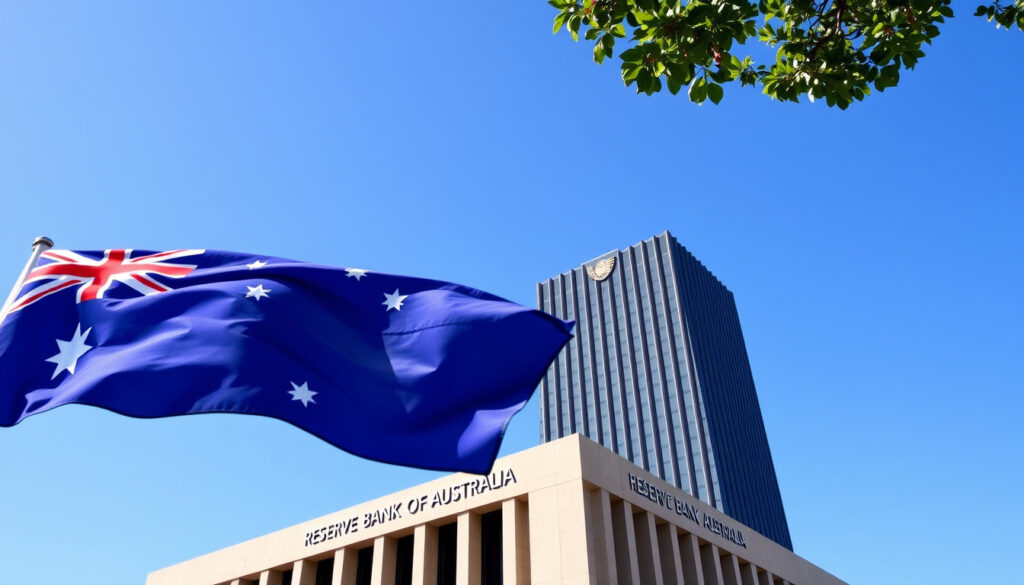
The Reserve Bank of Australia stands as the nation’s central financial institution, responsible for steering monetary policy, maintaining price stability, and ensuring the smooth operation of payment systems across the country. As the sole issuer of Australian banknotes, the RBA plays a foundational role in the economic lives of millions of Australians, influencing everything from mortgage rates to the value of the Australian dollar.
Established through legislation in 1960, the RBA operates with statutory powers granted by Parliament, operating independently in its monetary policy decisions while remaining accountable to the Australian government. The institution’s dual mandate centers on controlling inflation within a 2–3 percent target range and promoting full employment, objectives that guide its regular decisions on interest rates and financial system oversight.
For anyone seeking to understand how monetary policy affects their finances, from savings accounts to business loans, the Reserve Bank’s decisions reverberate throughout the entire economy. This overview examines the bank’s structure, leadership, policy tools, and historical development to provide a comprehensive picture of Australia’s most influential financial institution.
What is the Reserve Bank of Australia?
The Reserve Bank of Australia serves as the country’s central bank and official banknote issuing authority. Its creation resulted from the Reserve Bank Act 1959, which transferred central banking functions from the Commonwealth Bank to the newly established RBA on 14 January 1960. This transition marked a deliberate move to separate monetary policy operations from commercial banking activities.
- The RBA independently sets the official cash rate but remains accountable to the Australian government through regular reporting and legislative oversight.
- The bank issues Australian banknotes but does not produce coins—that responsibility falls to commercial mints under government contract.
- Australia’s gold and foreign exchange reserves managed by the RBA are estimated at A$101 billion in total assets.
- The inflation targeting framework was formally adopted in 1996, establishing a 2–3 percent average target over the economic cycle.
- The RBA provides banking and registry services to government agencies and overseas central banks, functioning as a banker to the state.
- Over $74 billion worth of Australian banknotes remain in circulation across the economy.
- Unlike commercial banks, the RBA does not provide bank accounts or loans directly to the public.
| Fact | Details |
|---|---|
| Legal Framework | Reserve Bank Act 1959 |
| Ownership | Fully government-owned |
| Primary Function | Monetary policy and financial system stability |
| Banknotes in Circulation | Over $74 billion |
| Total Managed Reserves | Approximately A$101 billion |
| Inflation Target | 2–3 percent annual average |
| Policy Tool | Official cash rate adjustment |
| Three Boards Structure | Monetary Policy, Payments System, Governance |
Who Leads the Reserve Bank of Australia?
The Governor and Executive Leadership
Michele Bullock has served as Governor of the Reserve Bank of Australia since 2023, becoming one of the most prominent figures in Australian monetary policy. As the head of the institution, the Governor chairs the Monetary Policy Board and represents the RBA in official communications with government, financial markets, and international bodies. The position carries significant influence over the economic direction of the nation through its direct control over interest rate decisions.
The Governor serves a seven-year term, providing continuity and insulation from short-term political pressures. This arrangement allows the RBA to maintain credibility with financial markets, knowing that policy commitments will persist across electoral cycles.
The Three-Board Governance Structure
Following legislative changes in November 2024, the RBA restructured its governance under the Reserve Bank Act 1959 to include three distinct boards, each with specific responsibilities. This reform aimed to enhance oversight, clarify accountability, and improve the transparency of decision-making processes.
The Monetary Policy Board determines interest rate settings and contributes to financial system stability objectives. The Payments System Board sets policy for payment infrastructure, ensuring that financial transactions between banks and businesses remain secure and efficient. The Governance Board oversees organizational affairs, banking services provided to government agencies, and banknote management operations.
The November 2024 structural changes marked the most significant governance reform for the RBA in recent decades, separating functions that had previously been consolidated under the single Board structure.
What is the Current RBA Cash Rate and How is it Set?
Understanding the Cash Rate Mechanism
The RBA controls inflation primarily through adjusting the official cash rate, which represents the interbank overnight interest rate at which banks lend to each other for reserve balances. This rate serves as the benchmark for all other interest rates in the Australian financial system, affecting mortgage rates, business lending costs, and savings returns across the economy.
When inflation rises above the 2–3 percent target range, the RBA typically raises the cash rate to cool economic activity and bring price pressures under control. Conversely, when inflation falls below target or economic growth stalls, reducing the cash rate provides stimulus by making borrowing cheaper and encouraging spending.
Recent Cash Rate Decisions
In January 2026, the Reserve Bank raised the key interest rate for the first time in two years to 2.58 percent, responding to unexpectedly high inflation that had persisted despite previous policy settings. This decision came amid labor market conditions showing unemployment at a seven-month low in December, suggesting continued pressure on wages and prices.
The RBA’s decision-making process involves thorough analysis of economic data including inflation figures, employment statistics, GDP growth, and international economic conditions. Board members meet regularly to assess these factors and vote on appropriate policy responses.
When the RBA raises the cash rate, commercial banks typically pass these increases onto borrowers through higher mortgage and loan interest rates. For savers, higher rates often mean better returns on savings accounts and term deposits.
History, Location, and Operations of the RBA
Establishment and Historical Development
The Reserve Bank of Australia was formally established on 14 January 1960, when the Reserve Bank Act 1959 took effect. This legislation separated central banking functions from the Commonwealth Bank, creating an independent institution dedicated to monetary policy and financial stability. The transition reflected international best practices that emerged during the mid-twentieth century, recognizing the benefits of insulating monetary policy from political interference and commercial banking interests.
The inflation targeting framework that now guides RBA policy was first introduced in 1993 by then-Governor Bernie Fraser. Treasurer Peter Costello and incoming Governor Ian McFarlane formalized this approach in 1996, establishing the 2–3 percent average inflation target that remains the cornerstone of Australian monetary policy today.
RBA Headquarters and Operations
The RBA maintains its headquarters in Sydney, where senior management, the three boards, and core policy functions operate. The institution employs approximately 1,800 staff members across various divisions including monetary policy, financial markets, corporate services, and banknote operations.
The banknote production and distribution facilities ensure that Australia maintains adequate currency supply throughout the economy. With over $74 billion worth of Australian banknotes currently in circulation, this operational function represents a significant logistical undertaking involving security printing, logistics, and quality control.
Banknote Issuance and Currency Operations
The RBA serves as the sole issuer of Australian banknotes, producing and distributing all denominations currently in circulation. The bank does not issue coins—that function belongs to commercial mints operating under government contract. Banknote operations include designing new security features, withdrawing damaged or worn notes, and ensuring adequate supplies reach financial institutions across the country.
Reserve management represents another critical operational function, with the RBA managing Australia’s gold and foreign exchange reserves. These reserves provide financial cushioning for economic shocks and support the value of the Australian dollar in international markets. The estimated total assets under management amount to approximately A$101 billion.
The RBA does not provide banking services to the general public. Individual Australians cannot open accounts, obtain loans, or conduct direct banking business with the Reserve Bank. Instead, the institution operates exclusively with government agencies, financial institutions, and overseas central banks.
How Has the RBA Evolved Since Its Founding?
Understanding the Reserve Bank’s development provides essential context for appreciating its current role and influence. The following key milestones illustrate how the institution has adapted to changing economic circumstances over more than six decades.
- 1959: Reserve Bank Act passed by Parliament, establishing the legal framework for the new central bank.
- 1960: RBA officially commences operations on 14 January, assuming central banking functions from the Commonwealth Bank.
- 1993: Governor Bernie Fraser introduces inflation targeting as a formal policy framework.
- 1996: Treasurer Peter Costello and Governor Ian McFarlane formalize the 2–3 percent inflation target.
- 2020s: Pandemic response includes significant interest rate adjustments to address economic disruption.
- 2023: Michele Bullock appointed as Governor, marking a leadership transition.
- 2024: Legislative reforms implement three-board governance structure effective November.
- 2026: First interest rate increase in two years, raising cash rate to 2.58 percent amid persistent inflation.
What Do We Know for Certain, and What Remains Unclear?
- The RBA operates under statutory authority granted by the Reserve Bank Act 1959.
- The Governor serves a seven-year term with clear legislative mandate.
- The inflation target of 2–3 percent average remains the official policy goal.
- The three-board structure became effective in November 2024.
- Michele Bullock has served as Governor since 2023.
- Banknote issuance represents a core statutory function.
- Total managed reserves are estimated at approximately A$101 billion.
- The precise timing and magnitude of future interest rate decisions.
- How global economic conditions will influence Australian monetary policy.
- The specific impact of inflation on various household segments over time.
- Whether the three-board structure will be modified in future reforms.
- The exact timeline for returning inflation sustainably to the 2–3 percent target.
- Potential changes to the bank’s operational responsibilities as financial technology evolves.
Why the RBA Matters to Australia’s Economy
The Reserve Bank’s influence extends far beyond its own balance sheet into virtually every corner of the Australian economy. When the RBA adjusts the cash rate, these changes cascade through financial markets to affect mortgage repayments, business investment decisions, employment levels, and the purchasing power of household budgets. The banknote issuance function ensures that Australians have access to physical currency for daily transactions, while its oversight of payment systems keeps the financial infrastructure functioning smoothly.
The institution’s role in managing foreign exchange reserves provides a buffer against international financial shocks and supports confidence in the Australian dollar’s value. This reserve management function becomes particularly important during periods of global economic uncertainty when capital flows can shift rapidly.
For businesses and investors, the RBA’s monetary policy decisions provide signals about the direction of economic growth and inflation expectations. These signals inform decisions about investment timing, hiring plans, and portfolio allocations. The transparency of the RBA’s communications—through statements, meeting minutes, and speeches—allows market participants to anticipate policy directions and adjust accordingly.
What Do Official Sources Say?
The duty of the Reserve Bank Board shall be to formulate the monetary policy of the Bank, and to ensure that the monetary and banking policy of the Bank is directed to the greatest advantage of the people of Australia.
— Reserve Bank Act 1959
The Bank contributes to the stability of the currency, full employment, and the economic prosperity and welfare of the Australian people.
— RBA Official Statement on Purpose
The RBA controls inflation primarily through adjusting the cash rate, the official interbank overnight rate, which serves as the benchmark for all other interest rates in the economy.
— University of New South Wales Policy Analysis
What to Know About the Reserve Bank of Australia
The Reserve Bank of Australia occupies a central position in the nation’s economic architecture, operating as an independent statutory authority with responsibility for monetary policy, financial system stability, and banknote issuance. Its governance structure now encompasses three specialized boards following reforms implemented in late 2024, with Michele Bullock serving as Governor since 2023. The institution’s inflation targeting framework—aiming for a 2–3 percent average—guides regular decisions on the official cash rate, which reverberates throughout mortgage rates, business lending costs, and overall economic activity.
Understanding the RBA’s role helps Australians appreciate how monetary policy decisions affect their personal finances, employment prospects, and the broader economic environment. For those monitoring interest rate movements and their impact on AUD conversion rates, the Reserve Bank’s communications and policy statements provide essential context for financial planning and economic analysis.
Where is the Reserve Bank of Australia located?
The RBA maintains its headquarters in Sydney, Australia, where core policy functions and governance boards operate.
Does the Reserve Bank of Australia print money?
The RBA issues Australian banknotes but does not produce coins. Banknote production and distribution represent core statutory functions of the institution.
What currencies does the RBA issue?
The RBA issues Australian dollar banknotes in various denominations. Coin production falls under commercial mint operations contracted by the government.
Is the Reserve Bank of Australia government-owned?
Yes, the RBA is fully government-owned and operates as a statutory authority established under the Reserve Bank Act 1959.
Who is the current Governor of the RBA?
Michele Bullock has served as Governor since 2023, presiding over the institution’s three-board governance structure.
How does the RBA set interest rates?
The Monetary Policy Board meets regularly to assess economic conditions and votes on adjustments to the official cash rate, which serves as the benchmark for all other interest rates in the Australian financial system.
Where can I learn more about the RBA?
The official RBA website provides comprehensive information on monetary policy, economic research, financial system oversight, and banknote operations. Reserve Bank of Australia Official Website
What is the RBA’s inflation target?
The RBA targets an annual inflation rate of between 2–3 percent, on average, over the economic cycle. This framework was adopted in 1993 and formalized in 1996.

Grace Clarke leads fact-checking, source verification and corrections at Southern Pulse.